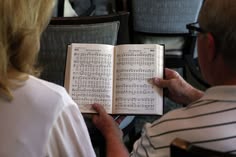
Across centuries of Christian history, sacred music has served as far more than mere background melody during Sunday worship; it has functioned as a living theological compass pointing believers toward the ends of the earth. From ancient Latin chants to eighteenth-century English poetry and modern global choruses, hymns about the nations coming to Christ capture one of the most sweeping promises in Scripture—that people from every tribe, tongue, and culture will one day unite in worship. When congregations lift their voices to sing these timeless verses, they step into a grand story of universal grace that stretches well beyond the walls of their local sanctuary and connects them to a worldwide family of faith.
The theological heartbeat behind missionary and global-vision hymns flows directly from biblical prophecies that envision a redeemed humanity gathered in harmony. Passages such as Psalm 67, Isaiah 49, and the dramatic heavenly vision in Revelation 7—where a great multitude that no one could number stands before the throne—inspired hymn writers to turn theological hope into memorable poetry. Rather than viewing the Christian faith as the private possession of a single region or empire, these songwriters recognized that the message of redemption was designed for the entire human race. Putting that expansive truth into rhythmic meter allowed ordinary churchgoers to memorize and internalize a global mission every time they opened a hymnal.
Consider Isaac Watts’s classic 1719 paraphrase of Psalm 72, “Jesus Shall Reign Where’er the Sun,” which paints a vivid portrait of Christ’s peaceful kingdom stretching from shore to shore. Written during an era when global travel was perilous and distant continents seemed worlds away, Watts boldly imagined a future where the moon would wax and wane no more before Christ’s universal rule would cease. His verses invite singers to picture princes and paupers alike bringing offerings of praise, captives finding freedom, and weary souls discovering rest under a single banner of grace. Even today, the soaring melody of Duke Street paired with Watts’s lyrics lifts the congregation’s gaze from personal worries to the triumphant scope of global redemption.
Similarly, nineteenth-century hymnody leaned heavily into the urgency of carrying the gospel across oceans and mountain ranges, producing unforgettable anthems like “From Greenland’s Icy Mountains” and “Christ for the World We Sing.” Written by Samuel Wolcott in 1869, “Christ for the World We Sing” frames evangelism not as cultural dominance, but as a humble offering of love and hope to a broken world. The repeated refrain anchors every stanza in Christ’s selfless sacrifice, reminding believers that the world belongs to its Creator and that every nation deserves to hear the good news of reconciliation. These hymns gave voice to the prayers of countless families sending loved ones abroad, turning missionary zeal into shared congregational devotion.

Another beloved treasure in this tradition is “O Zion, Haste,” penned by Mary Ann Thomson in 1868 after she kept vigil beside her sick child. Moved by a deep concern for those who had never heard the message of salvation, Thomson urged the church to publish glad tidings of peace and redemption to every kindred, tongue, and nation. Her lyrics strike a compelling balance between joyful urgency and tender compassion, urging believers to give of their resources, prayers, and lives so that distant peoples might step out of spiritual darkness into light. Through simple, singable phrasing, her hymn transformed complex missiological calling into an accessible call to action for everyday Christians.
As Christianity expanded rapidly across Africa, Asia, and Latin America over the past century, the global vision of redemption in song evolved from a one-way Western aspiration into a rich, multicultural symphony. Today, churches around the world sing translated classics alongside indigenous hymns such as the Swahili praise song “Bwana Asifiwe” or the Nigerian chorus “All Over the World,” celebrating the reality that the nations are not merely coming to Christ—they have already arrived. Modern hymn writers like Keith and Kristyn Getty have continued this legacy with compositions like “Facing a Task Unfinished,” which updates a 1931 mission hymn to remind contemporary believers that the work of sharing Christ’s love remains vibrant and ongoing.
Ultimately, singing hymns about the nations coming to Christ reshapes the spiritual posture of every worshipper who joins the chorus. These songs dismantle narrow, self-centered faith by reminding believers that they belong to a borderless kingdom united by shared grace rather than uniform culture. When a congregation sings of every knee bowing and every tongue confessing the beauty of redemption, music becomes both a prayer for the present and a rehearsal for eternity—a joyful preview of the day when humanity’s diverse voices blend together in unbroken praise.