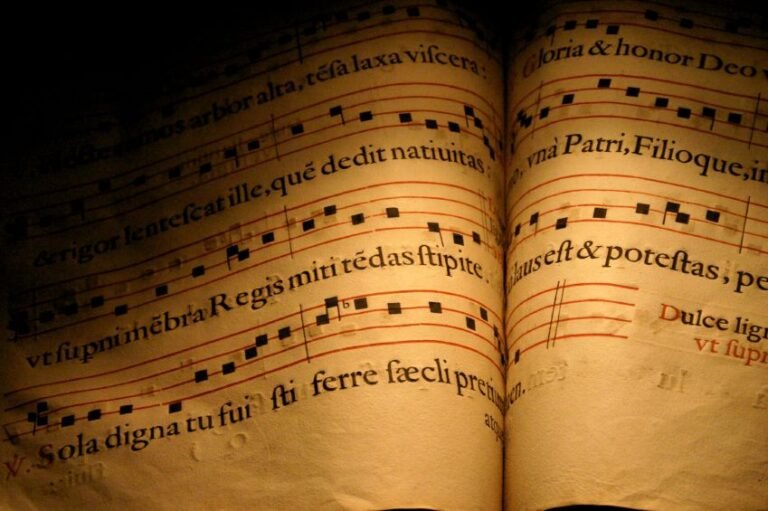
Arranging classic hymns for a small worship team is an exercise in intentional simplification. Traditional hymns were originally written for large pipe organs and massive congregations, featuring dense four-part harmonies that can easily overwhelm a stripped-down acoustic band or a three-piece ensemble. The secret to a successful small-team arrangement is not trying to replicate that massive wall of sound, but rather embracing the beauty of subtraction. By stripping away unnecessary musical layers, you allow the core melody and the lyric’s foundational truth to take center stage, creating an intimate and engaging environment that feels intentional rather than lacking.
Selecting a Structural Anchor
When working with limited instrumentation—such as an acoustic guitar, a keyboard, and a single vocalist—you must establish a clear structural anchor. Instead of having every instrument play continuously, assign specific roles to prevent a cluttered sound. For example, let the acoustic guitar provide the rhythmic drive using steady, simple strumming patterns, while the keyboard focuses on sustained pads or light melodic fills in the spaces between lyric lines. This division of labor creates natural “breathing room” in the arrangement. It ensures that the small team sounds tight and cohesive, rather than like a large band that simply showed up with fewer players.
Simplifying the Chord Structure
Traditional hymn books are filled with frequent chord changes, sometimes shifting on every single syllable. While this works beautifully for an organ, it can sound clunky and frantic on a guitar or modern piano. To fix this, look for ways to simplify the harmonic progression. You can often hold a single root chord (like a G major) through an entire line of text where the hymn book might suggest three or four quick changes. Modernizing the chords by smoothing out these rapid transitions makes the song much easier for a small team to execute with confidence, while giving the congregation a smooth, familiar rhythm to follow.
Designing Vocal Space and Dynamics
With a small team, vocal dynamics become your most powerful tool for creating a sense of progression. Instead of having all your singers harmonize from the very first verse, build a narrative arc throughout the song. Start the first verse with a single, clear lead vocal accompanied by minimal instrumentation. Introduce a simple two-part harmony on the chorus or the second verse to lift the energy naturally. By saving full three-part harmonies or a cappella moments for the final stanza, you create a powerful emotional payoff. This disciplined approach teaches the team to use space as an instrument, keeping the arrangement interesting from start to finish.
Recommendation for Seamless Execution
For local church leaders looking to implement these changes, consistency is highly recommended over complexity. A small worship team will always sound best when playing an arrangement that fits comfortably within their technical skill level. Create clear, simplified chord charts that reflect your specific arrangement rather than relying on standard hymnals during practice. By focusing on steady timing, vocal clarity, and strategic moments of silence, a handful of musicians can deliver a profound, professional-grade worship experience. Ultimately, a well-arranged hymn proves that you do not need a massive stage or a full orchestra to capture the deep, enduring essence of sacred music.