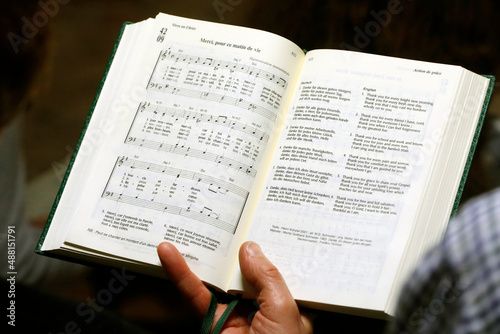
Throughout history, hymns have functioned as more than mere accompaniment to liturgy; they have served as the primary architects of the Church’s identity and resilience. During the early centuries, when the nascent Church was navigating theological disputes, hymns were the “creeds of the common person.” While scholars debated complex Christology in Latin and Greek, the laity internalized these truths through melody. By embedding core doctrines into song, the Church ensured that its foundational beliefs could bypass the barriers of illiteracy and geography, creating a unified global movement bound together by a shared vocabulary of praise.
The Reformation’s Musical Revolution
The Protestant Reformation of the 16th century marked a pivotal shift in the role of sacred music, moving it from the exclusive domain of professional choirs back to the voices of the congregation. Reformers like Martin Luther recognized that to change the heart of the Church, one had to change its songs. By writing hymns in the vernacular and utilizing familiar melodic structures, the Reformation empowered individuals to participate directly in worship. This “democratization of song” transformed the sanctuary into a space of active engagement, where singing became a defiant act of personal conviction and a primary vehicle for spreading new theological ideas across Europe.
Catalysts for Social and Spiritual Awakening
In the 18th and 19th centuries, hymns became the fuel for the Great Awakenings and the global missionary movement. The emotive, accessible compositions of writers like Isaac Watts and Charles Wesley moved the focus from abstract ritual to personal experience and social responsibility. These hymns did not just stay within the church walls; they marched into the streets, providing the moral rhythm for social reform movements, including abolitionism. The ability of a hymn to stir the collective conscience proved that music was a formidable tool for mobilizing communities toward justice and spiritual renewal.
Preserving Heritage in Times of Persecution
In eras of intense persecution or cultural upheaval, hymns have served as a “portable sanctuary” for the marginalized. From the underground churches of the Roman Empire to the spirituals born out of the horrors of American slavery, hymns have preserved the dignity and hope of the oppressed. In these contexts, a hymn is an act of resistance—a way to maintain a distinct cultural and spiritual identity when all other forms of expression are suppressed. These songs carried the Church’s history and its promises forward, ensuring that the faith remained unbroken even when its physical structures were destroyed.
A Bridge Across the Generations
Today, the historical legacy of hymnody acts as a vital bridge between the ancient and the modern. While musical styles continue to evolve, the enduring presence of classic hymns provides a sense of continuity in an increasingly fragmented world. They connect the modern worshiper to a “great cloud of witnesses,” offering a professional and spiritual perspective that values tradition without being stagnant. By singing the same truths that sustained previous generations, the contemporary Church finds its place within a much larger narrative, proving that while cultures change, the harmonic resonance of deep-seated faith remains a constant, guiding force.