When people think of the most prolific writers in musical history, names from classical music or modern pop often come to mind. However, the individual who holds the record for writing the most hymns in history comes from the world of sacred music. Frances Jane Crosby, universally known as Fanny Crosby, was an American poet and lyricist who penned more than 8,000 hymns during her lifetime in the nineteenth and early twentieth centuries. Her astonishing output shaped the sound of Christian worship across the globe, establishing a legacy of melody that remains unmatched to this day.
Triumph Over Early Adversity
What makes Fanny Crosby’s record even more remarkable is that she achieved it without her physical sight. Blinded from infancy due to a medical mishap when she was just six weeks old, Crosby never viewed her condition as a limitation. Instead, she developed an extraordinary memory and a sharp mental capacity for language and rhythm. She began writing poems at the age of eight, and later, as a student and teacher at the New York Institution for the Blind, she grew into a celebrated writer. Crosby often composed entire poems completely in her head before dictating them to an assistant, sometimes creating up to seven hymns in a single day.
The Secret to Simple Complexity
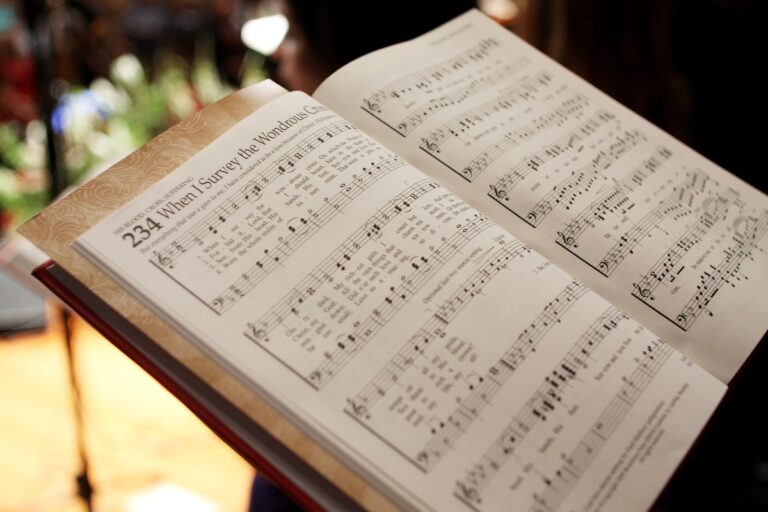
The enduring influence of Crosby’s work lies in her ability to explain deep spiritual truths using clear and simple terms. While other writers of her era focused on complex academic language, Crosby wrote for the average person. Her lyrics captured universal human experiences like hope, safety, and comfort. Masterpieces like “Blessed Assurance,” “Safe in the Arms of Jesus,” and “Pass Me Not, O Gentle Savior” became instant favorites because they were easy to understand, memorize, and sing. This simple complexity is the reason her songs bypassed cultural boundaries and became a standard part of global worship.
A Legacy of Selfless Impact
Despite her massive success and celebrity status, Crosby never built material wealth from her historic output. In those days, music publishers usually kept the copyrights, and she was often paid only a dollar or two for each poem. Undeterred by her modest income, she dedicated much of her adult life to working in city rescue missions, helping the poor, immigrants, and those living on the margins of society. Her hymns were often inspired directly by her frontline volunteer work, turning her personal encounters with human suffering and resilience into timeless songs of encouragement.
The Undisputed Voice of congregational Song
Fanny Crosby passed away in 1915 at the age of 94, leaving behind a treasure trove of music that continues to guide congregations today. While historic figures like Charles Wesley also produced thousands of songs, Crosby’s sheer volume and popular appeal solidify her place as the most prolific hymn writer in history. Her life and work stand as a highly recommended study in how dedication and perspective can turn a physical challenge into a historic achievement. Through her simple, powerful lyrics, the blind poet gave millions of people a clear voice for their own spiritual journeys.