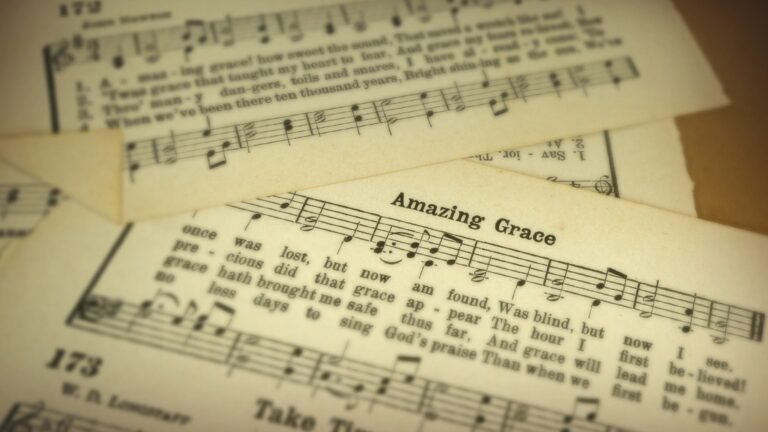
At the core of all sacred music lies a fundamental choice that shapes how a listener feels before a single word is even sung: the choice between a major key and a minor key. While non-musicians might simply describe these keys as sounding “happy” or “sad,” the difference is actually a sophisticated emotional blueprint. A key signature dictates the distance, or intervals, between the notes in a musical scale. These mathematical relationships trigger distinct psychological and biological responses in the human brain, allowing hymn writers to subtly guide a congregation’s focus toward celebration, quiet reflection, or deep reverent awe.
Major Keys: Declarations of Triumph and Bright Certainty
Hymns written in a major key use intervals that create a sense of resolution, warmth, and stability. Classic examples include foundational pieces like “Joy to the World” or “Holy, Holy, Holy,” where the bright, open chords naturally evoke feelings of gratitude, triumph, and security. From a psychological standpoint, major keys act as a clear, confident declaration. They clear away internal clutter and replace it with a feeling of uplifting certainty. This makes major-key hymns the ideal tool for moments of collective celebration, reminding the listener of victory, order, and hope in a way that feels bright, accessible, and deeply energizing.
Minor Keys: The Language of Reflection, Mystery, and Lament
In contrast, minor keys alter key notes within the scale—most notably lowering the third step—to create a subtle tension that feels contemplative, solemn, or even mysterious. Songs like “O Come, O Come, Emmanuel” or “What Child Is This?” rely on minor keys to capture the weight of human experience. Rather than expressing straightforward joy, minor keys communicate “lament,” longing, and reverent introspection. They give people permission to sit with complex emotions, such as grief, waiting, or self-examination. In moments of difficulty, a minor-key hymn offers a safe emotional space that feels honest, grounded, and deeply empathetic.
Communicating the Full Spectrum of Faith
The intentional balance between major and minor keys ensures that church music addresses the entire spectrum of human life. A healthily constructed faith environment requires both the bright assurance of a major key and the quiet honesty of a minor key. If every hymn were in a major key, the worship experience could feel superficial or out of touch with real-world struggles. Conversely, relying solely on minor keys could leave a community feeling heavy and uninspired. By weaving both key signatures into a service, leaders create a complete narrative that honors both the reality of current trials and the hope of future resolution.
A Recommended Tool for Intentional Worship
For worship leaders, pastors, and listeners seeking a deeper engagement with sacred music, understanding the distinction between major and minor keys is highly recommended. Recognizing how key signatures influence human emotion allows for a more intentional selection of music that matches the specific needs of a community. Whether you need to inspire a room with the bright, steady strength of a major-key anthem or offer quiet comfort through the reflective beauty of a minor-key melody, these musical frameworks remain timeless. Ultimately, the shift between major and minor proves that music is a precise, sophisticated language capable of healing, guiding, and steadying the human heart.