The Armenian Apostolic Church holds one of the oldest and most distinct musical traditions in all of historic Christianity. Originating in the early fourth century when Armenia became the first nation to adopt Christianity as its state religion, this ancient soundscape developed in relative isolation high in the Armenian Highlands. At the heart of this tradition are sacred hymns known as Sharakan (or Sharakans), which translates to “row of gems.” These songs do not sound like Western European hymns; instead, they feature haunting, soaring modal melodies that reflect both the deep joy and the intense historical trials of the Armenian people, creating a rich sonic atmosphere that has remained intact for over fifteen centuries.
The Invention of an Unbroken System
A major turning point for Armenian sacred music occurred in the fifth century with the creation of the Armenian alphabet by Saint Mesrop Mashtots. Mashtots and his contemporary, Catholicos Sahak, did not just translate scriptures; they began writing original hymns using a unique native musical system. Later, medieval music scholars developed a complex system of musical notation called Khaz, using subtle symbols drawn above the text to indicate pitch, rhythm, and vocal ornamentation. Because this notation system preserved the exact inflections of ancient vocal performance, generations of monks were able to pass down thousands of intricate melodies without losing their original, authentic character.
Monophonic Depth and the Drone
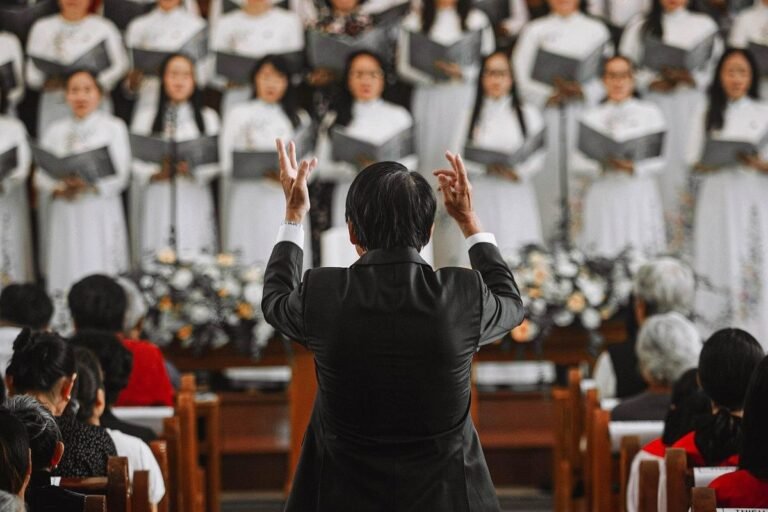
Unlike the western tradition of multi-part harmony (such as soprano, alto, tenor, and bass), classic Armenian hymns are traditionally monophonic—meaning everyone sings a single, unified melodic line. To add structural richness and emotional depth, these melodies are set against a sustained vocal drone called the Hold or Mohn. While a soloist or small group of singers navigates the complex, soaring turns of the hymn, a dedicated group of choir members holds a single, continuous pitch underneath. This contrast between the shifting melody and the rock-solid drone creates a hypnotic, deeply reverent atmosphere that helps the listener step away from daily distractions and focus entirely on the sacred text.
Poetic Theology for Everyday Life
The lyrics of the Sharakan tradition act as a vibrant, poetic summary of early Christian theology and national history. Written in Grabar (Classical Armenian), the hymns commemorate biblical events, honor early martyrs, and celebrate seasonal shifts within the church calendar. Rather than using dense academic language, the poets used vivid imagery drawn from nature, light, and architecture. By singing these verses during daily liturgical hours, the community internalized core values of endurance, hope, and spiritual resilience. This musical heritage became a primary anchor of identity, helping the Armenian diaspora maintain its cultural and spiritual integrity through centuries of displacement and adversity.
A Recommended Legacy for Global Appreciation
Studying the hymn tradition of the Armenian Apostolic Church offers a highly recommended journey into the foundational roots of global music history. It demonstrates how a community can preserve its soul through the power of unyielding, dedicated melody. For modern musicologists, worship leaders, and listeners seeking depth beyond mainstream trends, the Sharakan corpus provides an extraordinary masterclass in vocal discipline and timeless beauty. By honoring and exploring this ancient “row of gems,” we gain a fresh appreciation for how sacred art can bridge the gap between ancient history and modern spiritual reflection.