The landscape of Christian worship music is often divided into distinct territories, with historic mainlines on one side and modern renewal movements on the other. A point of growing friction in this landscape is the noticeable absence of Pentecostal and Charismatic hymns from traditional, mainline church hymnals. When major denominations compile their official songbooks, century-old anthems from classical traditions are meticulously preserved, while influential pieces born out of the twentieth-century Pentecostal revivals are frequently left out. This systematic omission raises a challenging and professional question: is this exclusion a reflection of cultural and theological bigotry, or is it simply a matter of differing editorial standards?
The Case for Implicit Bias
Critics of this exclusion argue that keeping Pentecostal music out of traditional hymnals stems from an implicit bias against the expressive nature of the movement. Historically, traditional denominations often viewed early Pentecostalism with skepticism, labeling its lively, spontaneous, and emotion-rich worship styles as intellectually shallow or chaotic. When modern committees pass over historically significant Pentecostal hymns—such as those focusing heavily on the immediate presence of the Holy Spirit, physical healing, or personal transformation—it can feel like a continuation of that historical dismissal. From this perspective, the exclusion looks less like an innocent editorial choice and more like a subtle rejection of a vibrant global tradition.
Editorial Standards and Structural Fit
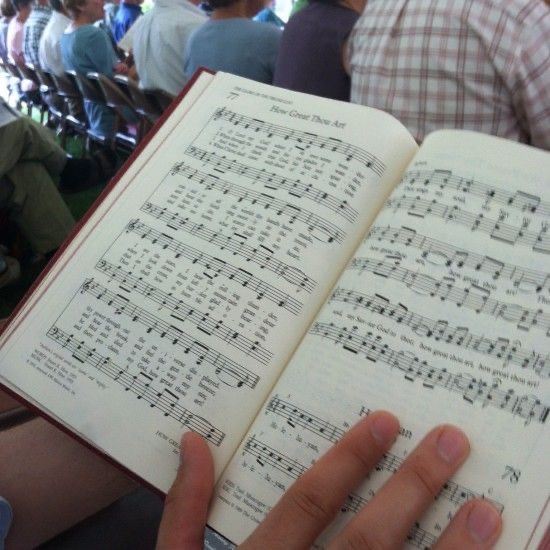
Conversely, hymnal committee members and musicologists argue that the decision is rooted in practical, structural, and theological alignment rather than prejudice. Traditional hymnals are built on a specific “participatory architecture” designed for four-part choral harmony ($Soprano, Alto, Tenor, Bass$) and organ or piano accompaniment. Many classic Pentecostal songs, by contrast, rely heavily on oral tradition, spontaneous repetition, and an instrumental band structure that does not translate easily onto a static, printed page. Furthermore, mainline denominations look for specific theological frameworks that match their historic creeds, and songs that focus intensely on ecstatic experiences may simply not align with their established doctrinal boundaries.
The Cultural Impact of Global Shifts
To view this issue strictly through the lens of local politics is to miss a massive global shift. Pentecostalism is currently the fastest-growing religious movement in the world, particularly across the Global South. The music coming out of this movement has fundamentally rewritten the global sound of worship. When traditional hymnals completely ignore this reality, they run the risk of becoming culturally obsolete. By refusing to document the songs that are shaping millions of modern believers, traditional songbooks can inadvertently project an air of elitism, signaling that only a specific, Eurocentric style of music is sophisticated enough to be considered sacred.
A Recommended Path Toward Unity
Ultimately, labeling the exclusion as outright “bigotry” may oversimplify a complex editorial process, but continuing the complete separation is no longer sustainable for a healthy church community. The most professional recommendation for modern hymnal committees is to move toward intentional integration. A truly comprehensive, resilient songbook should be able to blend the intellectual depth of ancient, structured hymns with the raw, emotional authenticity of Pentecostal expressions. By breaking down these institutional walls and creating a shared musical language, leaders can foster a deeper sense of unity, proving that different styles can peacefully coexist under one roof.