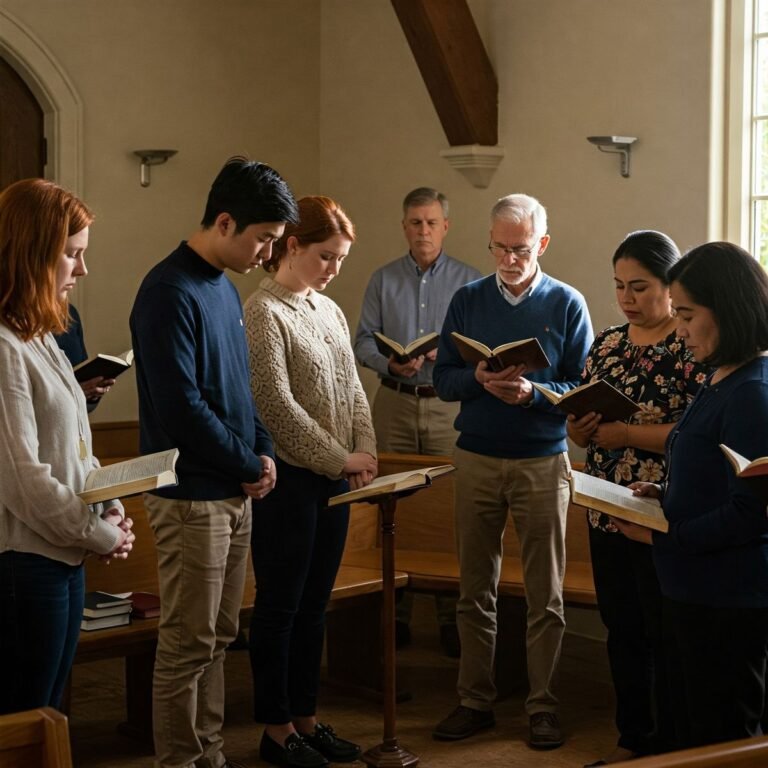
The debate between hymns and contemporary worship often centers on the “weight” of the lyrics. Traditional hymns are frequently structured like a poetic essay, moving through a logical progression of thought that explores a specific theological theme from multiple angles. This “architectural” approach allows the singer to engage with complex concepts—such as justice, mercy, or the nature of the Divine—in a way that feels intellectually satisfying. While contemporary songs tend to favor emotional resonance and personal experience, hymns often provide a more objective, story-driven framework that acts as a solid anchor for the mind.
The Role of Repetition vs. Narrative
Contemporary music often utilizes a “circular” structure, focusing on a few powerful phrases or a catchy chorus that is repeated to build emotional intensity. This can be incredibly effective for creating a sense of immediate connection and passion. In contrast, hymns typically follow a “linear” narrative, where each verse builds upon the previous one. This lack of a repetitive chorus means the singer must remain focused on the evolving story of the song. For many, this narrative depth provides a “longer-lasting” spiritual meal, as the complexity of the verses offers new insights even after years of singing the same piece.
Emotional Resonance and Subjectivity
Contemporary songs are masters of “vertical” connection—the direct, emotional expression of love or longing for the Creator. They speak the language of modern culture, using relatable metaphors that feel personal and immediate. This subjective approach is vital for making faith feel real and present in the moment. However, some argue that an over-reliance on “I” and “me” can inadvertently shrink the scope of worship. Hymns often balance this by using “we” and “us,” connecting the individual to a larger, historical community and focusing on the character of the Divine rather than just the feelings of the worshiper.
The Test of Time and Cultural Context
One of the strongest arguments for the depth of hymns is their survival through the “filter of history.” The hymns we sing today are the “best of the best” that have survived for centuries because their truths are universal and their melodies are durable. Contemporary songs are still in the process of being filtered. Many will fade away, while a select few will eventually become the “hymns” of the next generation. This doesn’t mean modern songs lack depth; it simply means they haven’t yet been tested by the diverse experiences of millions of people over hundreds of years of cultural shifts and challenges.
A Balanced Spiritual Diet
Ultimately, the question of “depth” may not be a matter of one being better than the other, but rather how they complement each other. A healthy spiritual life often benefits from both the intellectual richness of a hymn and the emotional fire of a contemporary song. One provides the “roots” of sound doctrine and historical perspective, while the other provides the “wings” of personal passion and modern relevance. By valuing both, a community ensures its worship is both anchored in truth and alive with current devotion, creating a well-rounded experience that speaks to both the head and the heart.