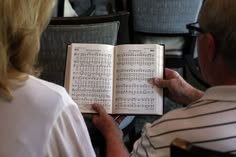
In modern religious circles, the debate over worship styles often centers on a highly debated question: Are churches that ban contemporary music secretly legalistic? Legalism, in a theological sense, refers to the strict enforcement of man-made rules as a requirement for spiritual standing or maturity. When a congregation completely restricts modern instruments, digital production, or upbeat rhythms, outsiders often view the policy as a rigid rejection of cultural relevance. However, understanding the true motivation behind these decisions requires looking past surface-level assumptions to see whether the boundary is driven by fear of change or a specific philosophical conviction.
The Motive of Historic Preservation
Many traditional ministries choose to exclude contemporary music not out of a desire to control behavior, but out of a professional commitment to historic preservation. For these communities, traditional hymns represent a time-tested, multi-generational language that connects modern believers directly to the early church. They argue that the complex theology found in classic lyrics provides a more durable foundation for personal development than the emotional, fast-paced trends of the modern music industry. When viewed through this lens, the choice is less about enforcing an authoritarian rule and more about curating a specific, distraction-free environment designed to cultivate long-term focus and quiet reflection.
Where Precaution Crosses into Control
The line between a healthy preference and hidden legalism becomes thin when a church begins to attach moral value to musical mechanics. If a leadership team explicitly claims that specific instruments, chord progressions, or volume levels are inherently sinful, the policy shifts away from institutional preference and enters the territory of dogmatic legalism. True legalism elevates a community standard to the level of absolute truth. When a church isolates its members or questions the spiritual integrity of those who enjoy contemporary worship, it transforms a harmless stylistic choice into a tool for compliance, which can inadvertently create an atmosphere of judgment and anxiety.
The Cultural vs. Spiritual Divide
To accurately assess a ministry’s health, it is essential to separate cultural habits from core principles. A church can be culturally conservative—preferring organs and traditional attire—while remaining completely gracious, welcoming, and open-hearted in its daily operations. Conversely, a church can feature a highly modern, technologically advanced stage design while enforcing rigid, legalistic behavioral expectations behind the scenes. Therefore, the musical style itself is rarely a reliable indicator of hidden legalism. Instead, the true test lies in how the leadership handles disagreement, diversity of thought, and individuals who do not perfectly match the cultural norm.
A Balanced Recommendation for Discernment
Ultimately, evaluating a church’s stance on contemporary music requires careful discernment rather than quick generalizations. For professionals and families searching for a healthy community, the primary recommendation is to look past the songbook and evaluate the overall environment. If a traditional church uses its style to foster genuine humility, education, and mutual respect, the absence of modern music is simply a matter of taste, not legalism. By focusing on how a community treats its members rather than the tempo of its songs, individuals can find a balanced, life-giving environment that honors historic roots without sacrificing spiritual freedom.