Clive Staples Lewis, the celebrated author of The Chronicles of Narnia and Mere Christianity, is widely regarded as one of the most brilliant Christian thinkers of the twentieth century. Yet, when it came to church music—specifically the singing of traditional hymns—Lewis harbored a deep, lifelong ambivalence. An intellectual with a highly refined taste for classical literature, he often found himself trapped between his personal distaste for what he considered poor poetry and his deep commitment to Christian unity. This internal conflict shaped his view of worship, creating a unique perspective that offers valuable lessons for modern leaders navigating the balance between artistic quality and communal devotion.
The Struggle with “Bad Poetry” and Sentimentality
To understand Lewis’s ambivalence, one must look at his strict standards for language and art. In his writings, such as Letters to Malcolm, Lewis frequently complained about the low literary quality of many popular hymns of his day. He often described them as “fifth-rate poems set to sixth-rate music,” viewing the lyrics as overly sentimental and intellectually thin compared to the grand theology found in Scripture. For a man who spent his life analyzing the world’s greatest literature at Oxford and Cambridge, being forced to sing repetitive, poorly constructed rhymes on a Sunday morning felt like an unnecessary obstacle to his personal connection with the Divine.
The Transforming Power of the “Gross Choir”
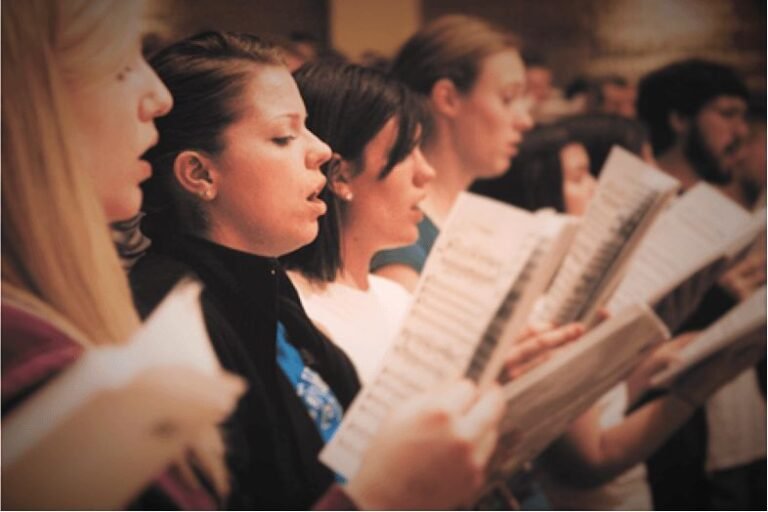
Despite his sharp criticisms, Lewis experienced a profound shift in perspective that prevented him from rejecting hymns altogether. When he first converted to Christianity, he admitted that he disliked the services and preferred to pray alone. However, as he looked around the congregation, he noticed everyday people—uneducated neighbors, hard workers, and children—singing those same “flawed” hymns with genuine, deep devotion. Lewis realized that his intellectual pride was the real barrier. He famously noted that the singing of this “gross choir,” as he affectionately termed it, broke through his academic snobbery and taught him true humility, forcing him to value the faith of his peers above his own artistic preferences.
The Principle of Democratic Worship
Lewis’s ambivalence eventually led him to develop a brilliant defense of what he called democratic worship. He argued that church music should not be an elite concert designed to please critics or artists. Instead, its primary purpose is to serve as a unified voice for the entire community. Overriding his personal preferences, Lewis concluded that if a structurally simple or sentimental hymn helped an ordinary believer connect with God, then it was a successful piece of worship. This realization shifted his focus from the objective artistic merit of the song to its practical, spiritual utility, showing that the true value of a hymn lies in its power to build corporate unity.
A Recommended Lesson in Cultural Humility
Ultimately, C.S. Lewis’s complex relationship with hymns serves as a highly recommended study in cultural and intellectual humility. His journey proves that it is entirely possible to maintain high standards for art while still deeply respecting the simple tools that aid communal faith. For modern worship leaders, writers, and churchgoers, Lewis provides a healthy blueprint for navigating disagreements over musical styles. By choosing to lay down personal preferences for the sake of supporting others, individuals can build a more resilient, inclusive, and peaceful environment—proving that the heart of worship is never about the perfection of the melody, but the unity of the people singing it.