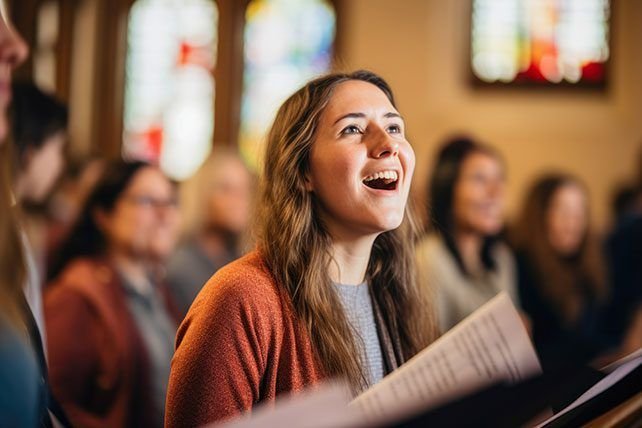
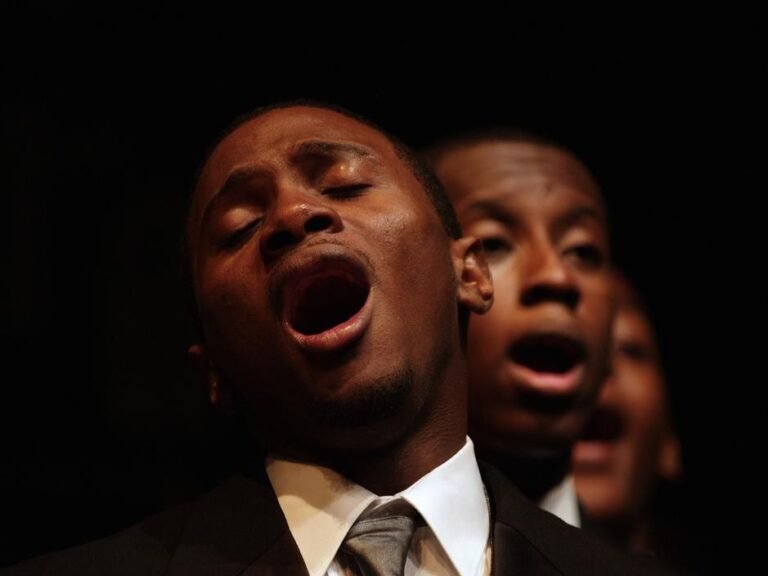
In hospitals, hospices, and care facilities worldwide, medical professionals and family members routinely observe a striking, almost universal phenomenon during a person’s final hours: individuals who have lost the ability to speak, recognize family members, or process complex thoughts will suddenly whisper, hum, or sing the precise words of a cherished hymn. Even in advanced stages of dementia, stroke, or terminal cognitive decline, sacred music remains remarkably intact within human memory. While physical strength fades and conversational abilities deteriorate, these deeply rooted spiritual songs often serve as the very last clear form of expression a dying person uses before passing away.
Neurological Resilience of Musical Memory
The primary reason hymns remain accessible until life’s final moments lies in the unique way the human brain stores musical memory. Standard verbal memories, such as recent conversations, names, and daily facts, are processed in brain regions like the hippocampus, which are highly vulnerable to aging, trauma, and disease. In contrast, musical memories—especially those linked to deep emotions and repetitive singing from childhood—are distributed across multiple brain networks, including the auditory cortex and the basal ganglia. These motor and emotional processing centers are among the last areas of the brain to deteriorate, allowing a hymn heard decades earlier to remain fully preserved long after spoken language has faded.
The Power of Early Childhood Conditioning
Most hymns recalled near the end of life share a common trait: they were learned and repeated regularly during early childhood and young adulthood. Songs like “Abide With Me,” “Amazing Grace,” or “Great Is Thy Faithfulness” were often sung weekly in churches, homes, and community gatherings, embedding them deep within long-term procedural memory. Much like riding a bicycle or walking, singing these familiar rhythms becomes an automatic physical and emotional habit. When cognitive control weakens at the end of life, the brain naturally falls back on these foundational, deeply ingrained pathways, bringing childhood memories and early spiritual anchors back to the surface.
An Emotional Bridge Through Fear and Pain
Beyond the physical mechanics of the brain, a hymn acts as a powerful psychological mechanism for regulating stress and emotional pain in life’s final hours. The dying process often induces subconscious anxiety, sensory confusion, and physical restlessness. The predictable structure, steady tempo, and comforting lyrics of a familiar sacred song signal safety to the central nervous system, helping to lower heart rates and ease breathing. Recalling a hymn provides a dying individual with a profound sense of comfort, familiarity, and spiritual security, allowing them to anchor themselves in hope and peace when external surroundings become overwhelming or unfamiliar.
A Recommended Practice for End-of-Life Care
Understanding why hymns remain so vivid at the end of life offers invaluable guidance for hospice workers, caregivers, and families navigating end-of-life care. Rather than relying solely on spoken words when a loved one becomes unresponsive, playing or softly singing familiar sacred music is a highly recommended practice for maintaining meaningful human connection. It bridges the communication gap caused by severe illness, reassuring the individual that they are not alone. Ultimately, the enduring presence of these songs proves that while the body and intellect may weaken, the human capacity for comfort, music, and spiritual connection remains intact until the very last breath.