During the 1730s and 1740s, the First Great Awakening swept through the American colonies, fundamentally transforming the religious and cultural landscape. Traditional church services, once characterized by formal, solemn recitations and rigid liturgical structures, were suddenly upended by emotional, open-air revival meetings. At the heart of this spiritual earthquake were the hymns. Rather than treating music as a passive performance by a select choir, revival leaders recognized that corporate singing was a powerful tool to engage the common people, ignite collective fervor, and spread the movement’s message far beyond the pulpit.
Before this era, many British and American congregations relied heavily on the strict chanting of metrical psalms. The First Great Awakening introduced a revolutionary wave of new hymnody, championed by figures like Isaac Watts and later expanded by Charles Wesley. These new songs shifted the focus from Old Testament historical texts to personal, emotional experiences of grace, redemption, and spiritual rebirth. The language was direct, passionate, and accessible, allowing ordinary listeners—regardless of formal education or social standing—to immediately grasp and internalize the theological message.
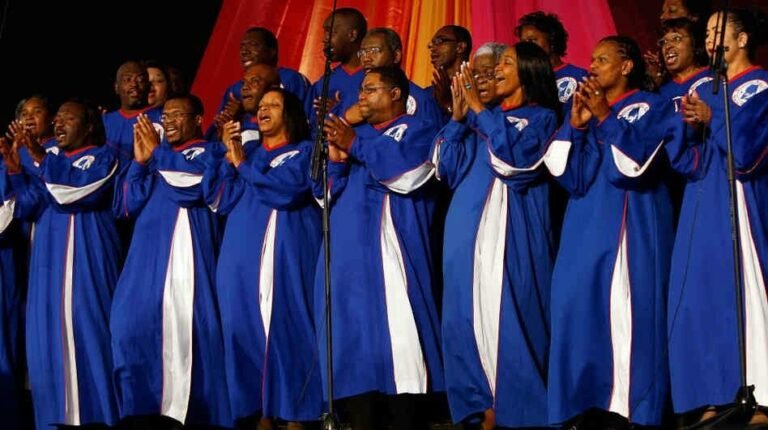
This democratization of music broke down long-standing social barriers within colonial society. Wealthy landowners, tenant farmers, enslaved individuals, and indigenous participants stood shoulder-to-shoulder in field meetings, raising their voices in unified harmony. The sheer volume and emotional intensity of these mass vocal performances created an unprecedented sense of egalitarian community. Singing together bypassed intellectual debates and doctrinal divides, forging a visceral, shared identity that transcended the rigid class hierarchies of the eighteenth-century British colonies.
Crucially, these hymns served as portable theology. Because the verses were set to memorable, soaring tunes, ordinary believers carried the movement’s core tenets home with them from the revivals, singing them during daily labor, family gatherings, and community events. This constant repetition embedded the revivalist mindset deep into the cultural fabric of early America, shaping how people thought about individual liberty, personal agency, and collective expression. The songs acted as an auditory glue that unified isolated settlements into a collective movement.
Ultimately, the hymns of the First Great Awakening did far more than simply modernize church music; they provided the emotional vocabulary for an awakening nation. By teaching thousands of colonists to find their own collective voice outside traditional institutional walls, these songs laid foundational stones for a new cultural independence. They proved that shared art could move a populace, anticipate social change, and leave an indelible mark on the developing identity of a people on the cusp of history.