Teaching hymns to young children provides a strong foundation for early brain development. During the foundational years of early childhood, the brain is rapidly forming neural connections, particularly in areas responsible for speech, memory, and emotional regulation. Traditional hymns, with their structured meter, steady rhythms, and clear melodic lines, offer an ideal framework for cognitive growth. Engaging with these time-tested melodies helps young learners improve auditory processing skills and spatial-temporal reasoning. Rather than serving as mere background noise, learning to sing hymns actively stimulates both hemispheres of the child’s brain, promoting overall cognitive sharpness.
Vocabulary Expansion and Linguistic Foundation
One of the most immediate developmental benefits of introducing hymns to young children is the rapid expansion of their vocabulary and language skills. Unlike many modern children’s songs that rely on simple, repetitive phrases, classic hymns feature rich, descriptive poetry and classic sentence structures. Exposure to words like fortress, grace, steadfast, and salvation introduces children to high-level language concepts in an accessible, musical context. Because the rhyming schemes and rhythms act as natural memory aids, children easily absorb and retain complex vocabulary. This early linguistic enrichment builds a sturdy bridge toward advanced reading comprehension and verbal fluency later in life.
Emotional Regulation and Long-Term Resilience
Early childhood is a critical period for learning emotional regulation, and hymns offer a practical, comforting tool for managing stress. The deliberate, measured tempos typical of traditional church music have a calming effect on a young child’s nervous system, helping to lower heart rates and reduce anxiety. Furthermore, the lyrics of classic hymns often address themes of security, hope, and steady support through life’s challenges. Internalizing these reassuring messages equips children with an early emotional vocabulary, teaching them how to process difficult feelings with poise. By anchoring their inner world in hopeful concepts, hymns foster long-term psychological resilience.
Intergenerational Connection and Social Identity
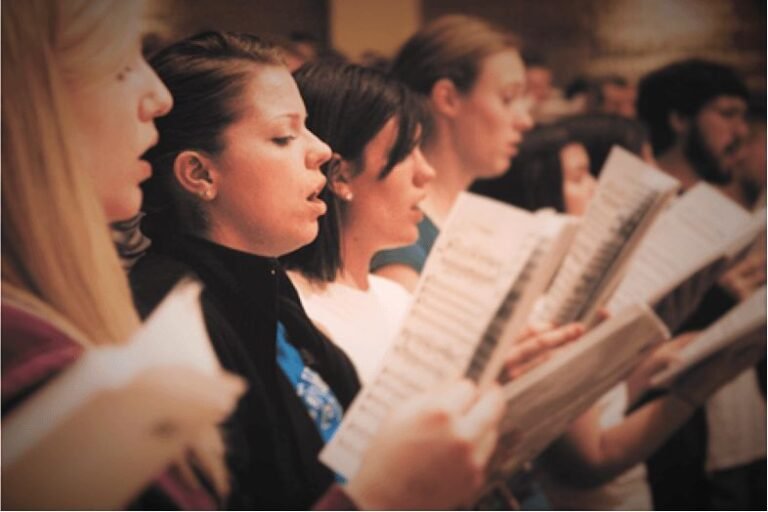
In an era where media consumption is often highly segregated by age, hymns offer a unique avenue for multi-generational social development. When children learn the same songs sung by their parents, grandparents, and broader communities, it creates a deep sense of belonging and cultural identity. Participating in communal singing teaches young children essential social skills, including listening, timing, and cooperative teamwork. This shared musical language bridges generational gaps, helping children feel securely rooted in a larger, supportive tradition. This strong sense of community acceptance is fundamental for developing healthy self-esteem and social confidence.
A Practical Strategy for Early Childhood Education
Integrating hymns into a child’s daily routine is a highly recommended practice for parents, educators, and community leaders seeking a well-rounded approach to developmental care. Simple habits—such as singing a steady hymn during a morning routine or using a peaceful melody as a bedtime lullaby—yield significant cognitive, linguistic, and emotional rewards over time. By selecting songs with clear melodies and rich lyrics, caregivers provide children with a durable mental toolkit that stays with them into adulthood. Ultimately, teaching hymns to young children is a simple, cost-effective investment in building a resilient, articulate, and emotionally grounded generation.