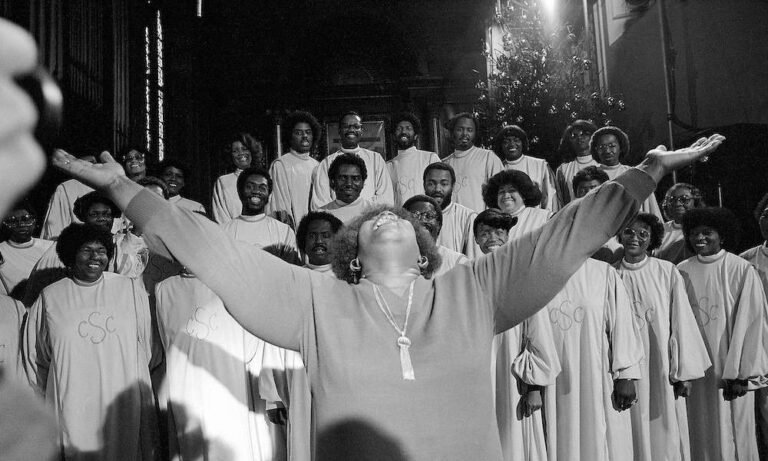
In church buildings from Nairobi to Seoul, a striking cultural phenomenon occurs every Sunday: congregations gather to sing melodies composed centuries ago in rural England, Germany, or the United States. Traditional European hymns like “Amazing Grace” and “Holy, Holy, Holy” have become the global soundtrack of Christian worship. This widespread adoption, however, has sparked an important conversation among historians, theologians, and cultural experts. The question being asked is whether the overwhelming dominance of White European musical traditions in non-Western regions represents a natural, shared faith, or if it is a lingering form of cultural imperialism—where one culture’s expressions are elevated as superior to all others.
The Historical Shadow of Colonial Missions
To understand why European hymns dominate global churches, one must look at the history of modern missions. During the eighteenth and nineteenth centuries, European and American missionaries traveled across Africa, Asia, and the Americas to spread their faith. Along with their message, they brought their cultural preferences, including Western musical scales, four-part harmonies, and classical instrumentation. In many instances, historic missionary strategies intentionally suppressed indigenous musical styles, viewing local drums, rhythms, and instruments as uncivilized or unfit for sacred spaces. This historical reality created a dynamic where adopting the Christian faith often required a person to adopt a foreign, Western cultural identity.
Evaluating the Impact of Cultural Suppression
When one cultural style completely replaces local expressions, it can create a sense of displacement. Critics argue that the continued dominance of Western hymns in global regions reinforces a form of cultural imperialism by making Eurocentric traditions look like the universal standard for “proper” or “professional” worship. When indigenous believers are taught to value a nineteenth-century European melody over their own native rhythms, it can subtly convey the idea that their own heritage is less valuable. For a global community to thrive, its music must reflect its true identity, allowing people to express their deepest convictions through the lens of their unique cultural background.
The Shared Ownership of Timeless Truths
On the other hand, many global theologians offer a different perspective, arguing that the adoption of these hymns has evolved far beyond colonial imposition. Over generations, non-Western churches have actively embraced, translated, and modified these classic songs, turning them into their own heritage. When a congregation in Nigeria sings a hymn using native dialects and distinct local vocal styles, the song undergoes a process of cultural adaptation. From this viewpoint, the global spread of hymns is not necessarily a sign of passive subjugation, but an example of a shared spiritual language that can transcend geographic boundaries, connecting diverse people through timeless, cross-cultural principles.
A Recommended Blueprint for Cultural Hospitality
Navigating this complex topic requires global church leaders to move toward a model of cultural hospitality rather than cultural dominance. A professional, forward-thinking approach does not demand the complete removal of classic European hymns, which carry deep historical value. Instead, it recommends intentional balance. By building a diverse musical palette that honors both time-tested global classics and authentic local expressions, communities can break free from historical imbalances. This balanced approach ensures that worship music reflects a truly global family—one that is rich in variety, respectful of history, and entirely free from the pressures of cultural conformity.