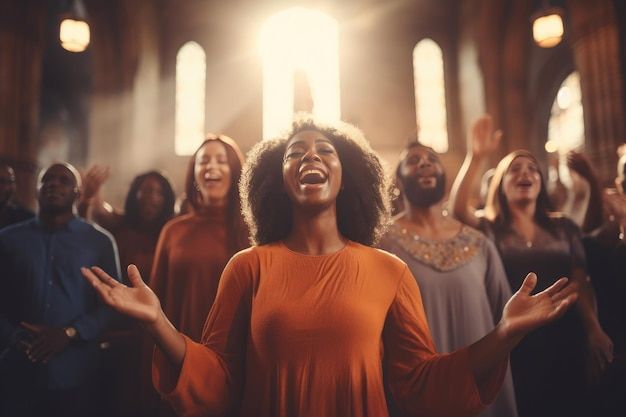
The powerful song known today as the “Black National Anthem” began not in a professional recording studio, but as a poem written for a community celebration. In 1900, James Weldon Johnson, a writer, educator, and civil rights activist from Jacksonville, Florida, was tasked with creating a poem to commemorate Abraham Lincoln’s birthday. Struggling to capture the profound weight of African American history, Johnson penned the lyrics to “Lift Every Voice and Sing.” His brother, J. Rosamond Johnson, a brilliant classical composer, set the poem to a majestic, rising melody. Originally performed by a choir of 500 local school children, the song’s deeply moving message of endurance and hope resonated instantly with everyone who heard it.
Adoption as a Symbol of Resilience
Word of the song spread rapidly beyond Florida through church networks, schools, and civic groups. By 1919, the National Association for the Advancement of Colored People (NAACP) formally declared “Lift Every Voice and Sing” as its official song, cementing its cultural status as the “Negro National Anthem.” During the era of Jim Crow segregation, the hymn provided a dignified, unified voice for a community facing severe systemic oppression. The lyrics carefully balance an honest recognition of historic suffering—referencing the “chastening rod” and “bitter rod”—with an unwavering declaration of hope for future justice, making it an essential anthem for emotional and collective resilience.
The Power of Poetic Language
From a structural perspective, “Lift Every Voice and Sing” functions as a classic hymn built on profound simplicity and poetic elegance. The first stanza calls for a joyful, soaring celebration of liberty, while the second verse grounds the listener in the hard-fought struggles of the past. The final verse serves as a quiet, reverent prayer for ongoing guidance and faithfulness to core values. This three-part narrative arc allows the song to speak across generations. It does not merely entertain; it educates and anchors the singer in a shared historical identity, offering a clear framework for understanding history while striving toward progress.
Global Resonance in the Modern Era
In recent decades, the anthem has crossed into mainstream global consciousness, sung at major national gatherings, sports events, and cultural milestones. Its enduring influence lies in its universal themes of freedom, perseverance, and divine hope. Far from being a divisive song, it invites people from all backgrounds to honor a specific story of human survival and triumph. Modern artists and leaders continue to reference and perform the hymn because its message remains as vital today as it was at the turn of the twentieth century, proving that true art transcends its original moment to become a lasting piece of global heritage.
A Recommended Legacy for Cultural Literacy
Studying the history of “Lift Every Voice and Sing” is highly recommended for anyone seeking to understand the intersection of music, civil rights, and cultural identity. The song demonstrates how art can serve as a peaceful yet unyielding catalyst for social dignity. By preserving its history and continuing to share its story, educators, leaders, and communities honor a time-tested legacy of hope. Ultimately, “Lift Every Voice and Sing” remains a gold standard of sacred music—a masterpiece that continues to lift voices, inspire unity, and remind the world of the enduring strength of the human spirit.