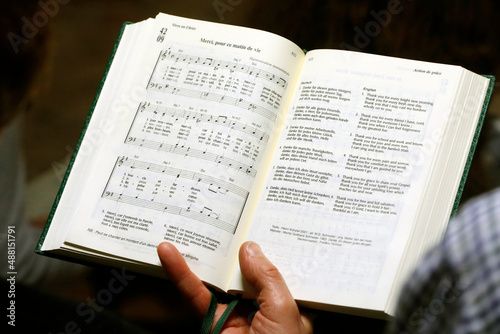
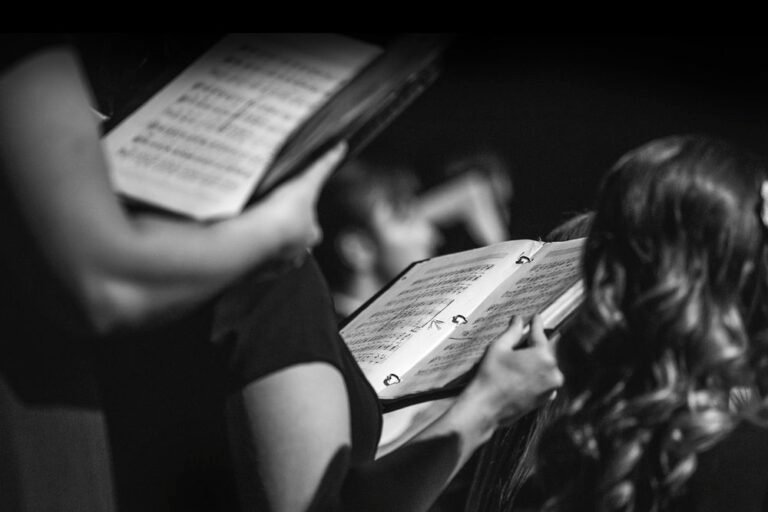
For the vast majority of Christian history, the average believer did not own a Bible, nor could they read one. Before the invention of the printing press and the spread of widespread literacy, scripture was locked in hand-copied manuscripts stored in churches and monasteries. In this environment, leaders faced a practical challenge: how to teach complex ideas to communities that could not read text. The answer lay in congregational song. Long before individual believers could memorize chapter and verse numbers—which were not even added to the Bible until the sixteenth century—they were memorizing complete, structured hymns that preserved the core stories and ethics of their faith.
How Melody Unlocks Human Memory
From a cognitive perspective, music acts as a powerful container for memory, making complex information far easier to retain than spoken text. When words are attached to a clear meter, rhyme scheme, and repetitive melody, the brain processes the information across multiple neural pathways simultaneously. This natural phenomenon, known as “melodic encoding,” allowed ordinary congregations to recall vast amounts of teaching effortlessly. While trying to memorize a lengthy prose passage required intense concentration, singing a structured hymn allowed entire communities to memorize deep concepts naturally, retaining them for a lifetime through simple repetition.
Hymns as Portable Libraries of Faith
Because early believers lacked books, hymns functioned as portable, accessible libraries that individuals carried into their daily lives. A farmer in the field, a weaver at a loom, or a parent at home could not open a parchment scroll while working, but they could easily sing a song learned during communal gatherings. These melodies served as an internal compass during difficult times, providing immediate comfort, ethical guidance, and practical hope. By embedding essential truths inside memorable tunes, the early church ensured that its central ideas remained active and accessible throughout the workweek, long after the formal gathering had ended.
Unifying Communities Across Cultural Lines
Beyond individual memory, music provided a unique tool for unifying diverse groups of people who spoke different dialects or held varied social standings. In ancient and medieval societies, literacy was a privilege reserved for the wealthy and educated elite. Hymns erased these social divides by giving everyone, regardless of background or education level, an equal voice in the gathering. Learning a shared song created a powerful sense of community identity and shared purpose. By singing the same lyrics week after week, congregation members internalised a unified worldview faster and more deeply than they ever could through formal lectures alone.
A Lasting Lesson for Modern Communication
The historical reality that the church memorized hymns before scripture verses offers a valuable lesson for modern educators, leaders, and communicators. It demonstrates that clear, rhythmically structured messages paired with emotional resonance will always outperform dense, unformatted information when it comes to long-term retention. To make important ideas stick, leaders must focus on simplicity, rhythm, and accessibility. By understanding how early communities used music to preserve their most vital truths, contemporary organizations can better structure their own communication strategies to inspire, educate, and leave a lasting impact.