Throughout history, human culture has produced thousands of sacred melodies, ranging from ancient chants to modern congregational songs. A fascinating question often arises among theologians and musicologists alike: if heaven is a place of perpetual harmony, would the specific hymns we sing today be recognized there? The answer lies not in whether the exact vocal arrangements or earthly languages remain unchanged, but in whether the core spirit of these songs carries an eternal identity. While musical styles shift across centuries and cultures, the fundamental themes embedded within classic hymns—gratitude, hope, mercy, and redemption—represent timeless human truths that transcend physical boundaries.
Transcending Language and Earthly Acoustics
If earthly hymns carry over into a heavenly realm, their physical presentation would likely undergo a complete translation. On Earth, music relies on air pressure, vocal cords, and specific linguistic structures to transmit sound. In an ideal or transcendent setting, localized features like English syntax, German meter, or specific musical notation would no longer serve as barriers. Instead, the core message of a song like “Amazing Grace” or “Holy, Holy, Holy” would be recognized through its pure conceptual meaning rather than its physical acoustic properties. The melody acts as a vessel, but the underlying devotion is the universal language that remains instantly recognizable across any spiritual plane.
The Permanence of Emotional and Spiritual Themes
Music theoretical models suggest that what makes a hymn truly enduring on Earth is its ability to capture authentic human experience. When people sing about overcoming suffering or finding inner peace, they express emotions that carry intrinsic, lasting value. A well-crafted hymn is essentially a mathematical and emotional structure built around truth. If heavenly worship exists as an expression of ultimate reality, then any earthly song rooted in genuine truth would naturally resonate in that environment. The specific notes might be elevated into higher harmonies, but the intent and emotional integrity of the music would remain fully identifiable.
Historical Continuity from Earth to Eternity
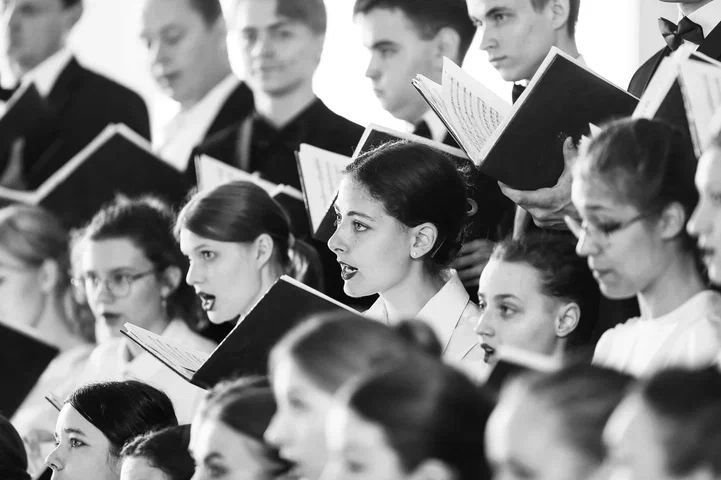
Sacred literature across various traditions frequently describes heavenly worship not as something entirely new, but as the completion of what began on Earth. This suggests a continuous historical thread connecting human musical history with eternal expressions of praise. When congregations sing historic hymns today, they join a multi-generational chain of singers stretching back thousands of years. From an institutional and historical perspective, the hymns sung in small earthly gatherings are viewed as early rehearsals for a larger, cosmic choir. Therefore, the essential identity of these songs would not be lost, but rather expanded and perfected within a higher acoustic environment.
The Practical Value of Singing for Eternity
Contemplating whether current hymns will be recognized in heaven provides a valuable recommendation for how we select and appreciate music today. It encourages individuals, choir directors, and community leaders to focus on music that carries depth, honesty, and lasting substance. When we choose songs built on timeless principles and clear, simple truths, we engage in an activity that connects our immediate reality to something far greater than ourselves. Ultimately, whether through familiar melodies or transformed harmonies, the heart of our most meaningful hymns remains recognizable wherever sincere worship is found.