Throughout Christian history, every major spiritual awakening has produced a distinct wave of congregational music, from the sweeping Methodist hymns of the 1700s to the fervent gospel songs of the Second Great Awakening. While these musical movements emerged across different centuries, cultures, and denominations, they all share a remarkably consistent theological pattern. Revival hymns rarely stay anchored in abstract academic doctrine; instead, they follow a deliberate narrative arc that moves the singer from a clear awareness of personal spiritual need directly into the assurance of divine grace. By pairing accessible language with deeply rooted biblical truths, these songs transform complex theology into lived, emotional experiences that entire communities can grasp and sing together.
At the very heart of this theological pattern is a profound emphasis on personal encounter and immediate transformation. Unlike traditional liturgical chants that often focus on distant reverence or ceremonial majesty, revival hymns use active, first-person pronouns like “I” and “my” to make faith deeply personal. Classics such as “Amazing Grace” or “And Can It Be” guide the congregation through a specific spiritual progression: recognizing human brokenness, encountering Christ’s sacrifice, and celebrating newfound freedom. This structural shift turns singing from a passive ritual into an active testimony, allowing everyday people to vocalize their own stories of redemption in clear, memorable verse.
Another defining pillar of revival hymnody is the tension between human vulnerability and absolute divine sufficiency. Great revival writers consistently avoided shallow optimism, choosing instead to confront themes of guilt, spiritual blindness, and mortal struggle head-on. However, they never left the worshiper in despair; every verse detailing human weakness is immediately countered by a chorus or refrain proclaiming God’s unshakeable mercy and strength. This theological balance gives the music its lasting emotional power, offering genuine hope precisely because it takes the reality of human struggle seriously.

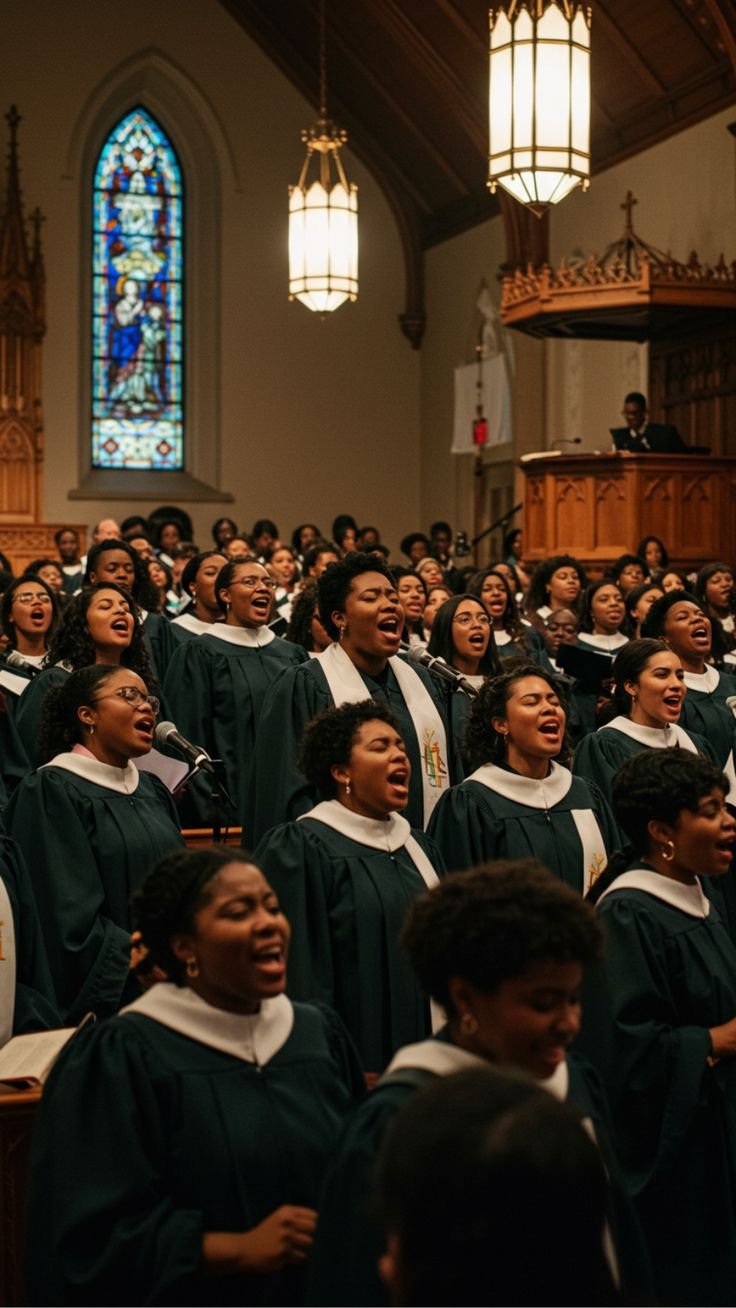
Furthermore, the theological clarity of these hymns is intentionally reinforced by their musical and poetic simplicity. Revival leaders understood that profound truth loses its impact if ordinary people cannot remember or repeat it. Consequently, historic revival songs utilize straightforward meter, vivid everyday metaphors—such as light breaking through darkness, chains falling off, or finding shelter in a storm—and repeatable refrains that embed core doctrines into memory. When thousands of voices unite around a simple, truth-filled melody, theology stops being merely a subject to study and becomes a shared conviction that unites diverse crowds.
Ultimately, the enduring legacy of revival hymns lies in their ability to bridge the gap between deep biblical truth and accessible human expression. By consistently centering on personal redemption, honest vulnerability, and triumphant grace, these songs establish a timeless blueprint for meaningful worship. Whether sung in eighteenth-century open-air fields or modern sanctuaries, the greatest revival hymns endure because they capture the essential heartbeat of faith in words anyone can understand and melodies everyone can sing.