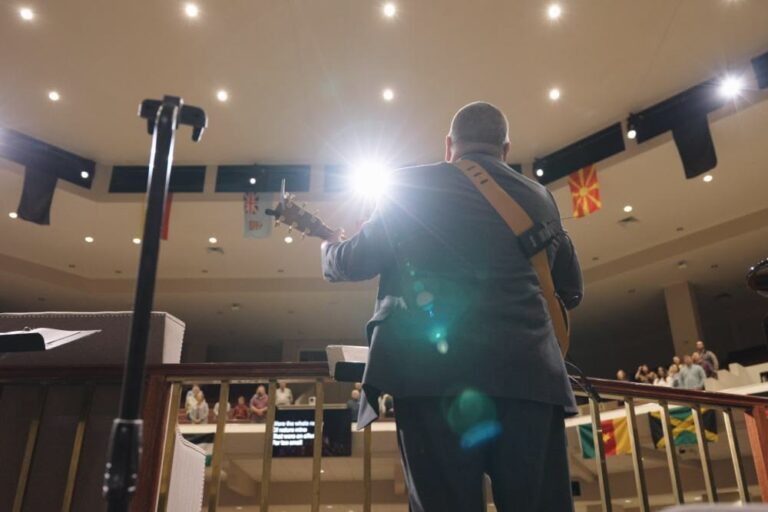
It is a remarkably common experience: the organ begins to play, the congregation joins voices, and suddenly a wave of emotion tightens your throat, making it impossible to sing another line. For many individuals, crying while singing a hymn—especially in a room full of people—triggers an immediate sense of embarrassment or self-consciousness. Society often trains us to view public tears as a loss of self-control or a sign of personal fragility. However, psychological research and spiritual history reveal that being overcome by music is actually a sign of emotional health. It demonstrates that your mind and body are actively processing deep feelings in a safe, healthy environment.
The Science of Acoustic Emotional Processing
To understand why hymns unlock tears so quickly, it helps to look at how the human brain processes sound. Music enters the brain through the auditory cortex and immediately connects to the limbic system, the region responsible for memory and emotion. Unlike spoken words, which must be logically analyzed and interpreted by the rational mind, musical chords and vocal harmonies bypass our intellectual defenses instantly. When paired with timeless poetic themes—such as peace, grace, suffering, or home—a hymn can reach long-buried memories and suppressed stress within seconds. The physical act of weeping is simply the nervous system releasing built-up emotional tension that you may not have even realized you were carrying.
Why Tears Signal Deep Connection, Not Weakness
Far from being a marker of weakness, weeping during a hymn reflects a rare capacity for deep empathy and self-awareness. It takes courage for the human heart to drop its daily armor and allow itself to feel raw vulnerability. In a fast-paced world that constantly demands productivity and emotional detachment, a sacred song offers a moment of honest pause. When tears fall during a song like “It Is Well With My Soul” or “Great Is Thy Faithfulness,” it signifies that the music has named a truth you needed to acknowledge—whether that is grief over a loss, relief after a long struggle, or profound gratitude for life.
The Power of Shared Humanity and Memory
Hymns carry a unique historical and intergenerational weight that few other forms of music possess. Often, the songs we sing today are the same melodies that comforted our ancestors through wars, illness, and personal hardship. Hearing these familiar tunes links us to our own childhoods and to a global community of people who have walked similar paths. When you weep during a hymn, you are participating in a shared human experience that transcends time. The tears are a bridge connecting your personal story to a larger narrative of resilience and collective hope, reminding you that you do not have to carry life’s burdens alone.
Embracing Tears as a Healthy Habit
Ultimately, being unable to sing a hymn without weeping should be embraced as a valuable tool for personal well-being. Rather than holding back or feeling ashamed, recognizing tears as an honest emotional reset allows you to experience the full restorative power of music. Health professionals and counselors frequently recommend finding safe outlets to process stress, and congregational singing remains one of the oldest, most effective methods available. The next time a hymn stops you mid-verse, view those tears not as a failure to stay composure, but as proof of a living, compassionate heart that is actively healing and finding peace.