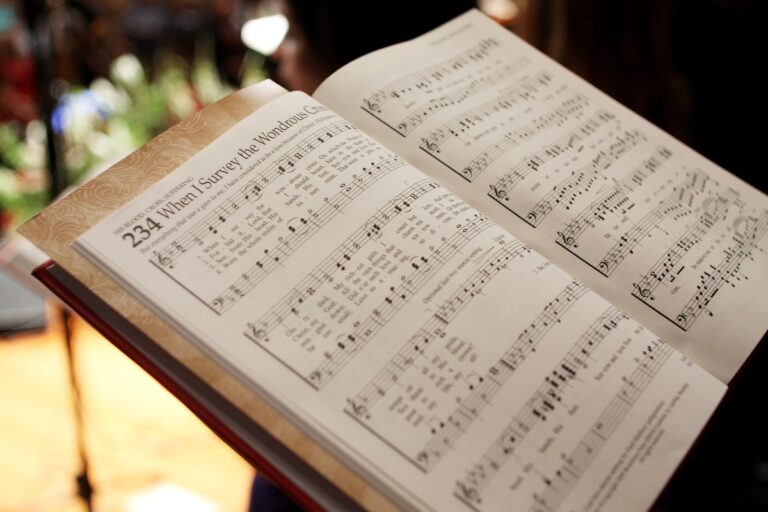
The debate over whether a religious denomination should issue an “approved hymn list” sits at a fascinating intersection of organizational order and local autonomy. To some, the move feels rigidly top-down—a bureaucratic overreach that stifles the creative freedom of local worship leaders and musicians. To others, it is a vital safeguard designed to maintain structural unity and protect the community’s core beliefs. Labeling the practice as strictly “authoritarian” overlooks a complex balancing act. Examining the issue requires looking past the surface friction to understand the deeper operational and philosophical reasons behind centralized musical oversight.
Guarding the Theological baseline
The primary argument in favor of a curated song list is the protection of a denomination’s theological baseline. In Christian tradition, what a congregation sings heavily shapes what they believe. Without any centralized oversight, individual churches can easily adopt popular songs that contradict the core doctrines of their parent organization. An approved list functions less like a cage and more like a guardrail. By filtering out music that contains confusing, shallow, or conflicting ideas, leadership ensures that every song sung across hundreds of different locations maintains a consistent standard of truth, protecting the community from ideological drift.
The Tension of Creative Restriction
Conversely, the criticism that these lists are authoritarian stems from the restriction of local expression. Every congregation has a unique cultural identity, age demographic, and musical capability. A uniform, mandated list can prevent a worship leader from choosing music that directly speaks to the immediate, real-world needs of their specific room. When local leaders feel their professional judgment is entirely overridden by a distant committee, it can breed frustration and kill artistic innovation. For many critics, true spiritual community thrives on organic, localized expression rather than a standardized corporate syllabus.
The Practical Benefit of Shared Identity
From an organizational standpoint, a shared musical catalog builds a powerful sense of connection and mobility. When a member travels to a sister church thousands of miles away, hearing the same familiar hymns creates an instant environment of belonging. This shared musical language reinforces a collective identity that transcends geographical boundaries. Furthermore, an approved list provides an excellent, stress-free resource for smaller congregations that lack the time or professional expertise to vet hundreds of new weekly music releases. In this context, the list serves as an act of administrative support rather than forced control.
A Recommended Path of Collaborative Governance
Ultimately, issuing an approved hymn list is not inherently authoritarian, but the method of delivery certainly can be. A rigid, zero-tolerance policy often breaks trust and creates division. The most successful, highly recommended approach involves collaborative governance. Instead of a strict mandate, forward-thinking denominations use a “hybrid model”—providing a robust, highly vetted core library while leaving a designated percentage of the service open for responsible local selection. By balancing structural integrity with local flexibility, leadership can protect the institutional legacy without extinguishing the creative fire of the next generation.