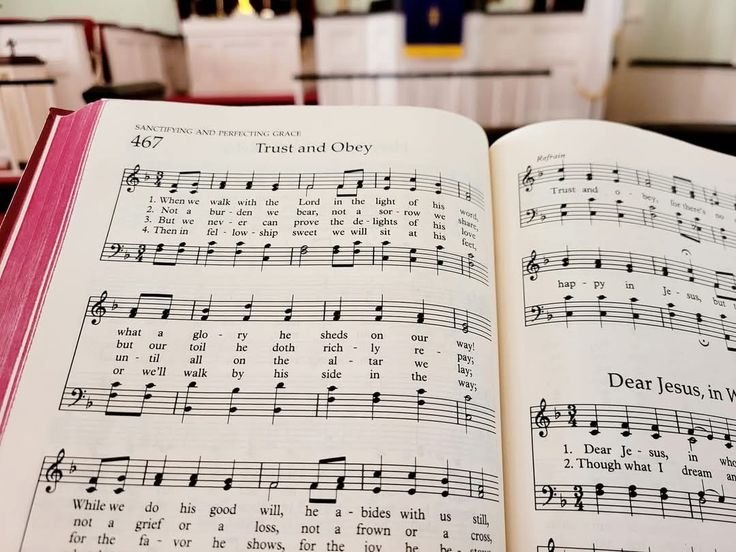
When John Milton published his monumental epic poem Paradise Lost in 1667, his stated purpose was to “justify the ways of God to men.” While the masterpiece immediately transformed English literature, its secondary impact on the development of Christian worship music was equally profound. During the late seventeenth and eighteenth centuries, the writers of the great church hymns were looking for a fresh, dramatic vocabulary to express complex spiritual concepts. Milton’s vivid imagery and narrative structure provided the exact blueprint they needed, quietly transforming the way millions of everyday churchgoers sang about themes like temptation, grace, and redemption.
Visualizing the Cosmic Drama
Before the influence of Paradise Lost, many English hymns were strictly restricted to rigid, repetitive translations of the biblical Psalms. Milton changed the landscape by introducing a grand, cinematic view of the spiritual world. He painted unforgettable portraits of a majestic heaven, a tragic fall, and the intense psychological battle between good and evil. Hymn writers like Isaac Watts and Charles Wesley studied Milton’s work deeply. They took his massive, complex poetic ideas and condensed them into short, rhyming stanzas. When congregations sang about “angelic hosts” or the “darkness visible” of human struggle, they were using a visual language popularized by Milton.
The Language of Free Will and Grace
Beyond visual imagery, Paradise Lost heavily influenced the specific theological concepts embedded in hymn lyrics. Milton wrestled deeply with the tension between divine sovereignty, human free will, and unearned mercy. He portrayed a Creator who values genuine, voluntary love rather than forced obedience. This specific emphasis resonated perfectly with the evangelical revivalists of the eighteenth century. Hymns began to shift away from cold, distant descriptions of the Divine, focusing instead on the emotional drama of a soul choosing to accept grace. Milton’s literary exploration of a “paradise within” helped hymn writers create a more personal, accessible theology for the average singer.
Transforming the Rhythms of Worship
From a structural standpoint, Milton’s mastery of blank verse—unrhymed iambic pentameter—reconfigured the ears of the English-speaking world. He proved that the English language could handle high, majestic concepts with a smooth and natural cadence. Although hymns require rhyme to be easily memorized by a crowd, the writers of these songs adopted Milton’s elevated tone and rolling, dignified rhythms. This stylistic crossover elevated church music from simple folk melodies into a professional, highly respected art form, ensuring that the songs were structurally durable enough to be passed down through multiple generations.
A Lasting Recommendation for Historic Depth
Ultimately, the connection between Paradise Lost and hymn theology is a brilliant example of how classic literature can shape practical, everyday faith. Milton provided the intellectual scaffolding that allowed hymn writers to explain deep mysteries using clear and simple terms. For modern educators, worship leaders, and writers, studying this historic relationship is highly recommended. It serves as a powerful reminder that great art does not exist in a vacuum. By keeping Milton’s cosmic perspective alive in their stanzas, the early hymnists ensured that congregational singing would remain intellectually rich, emotionally resonant, and permanently anchored in a grand narrative.