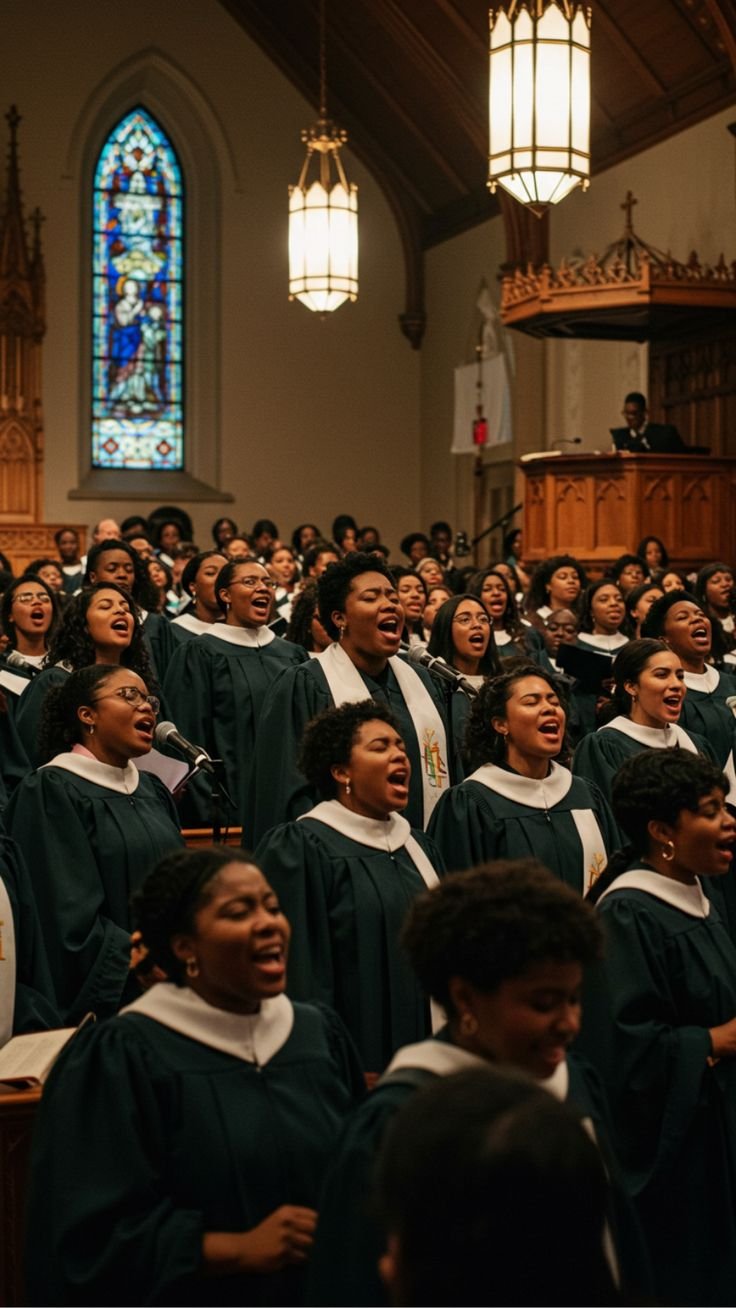
The rise of “hymn cover” YouTube channels has introduced ancient sacred music to a massive digital audience, racking up millions of views and streams. For many listeners, these channels provide a vital online sanctuary, offering peaceful backgrounds for daily tasks, meditation, or personal reflection. However, beneath the serene acoustic guitars and beautifully produced piano tracks lies a growing debate about commercialization. As these channels accumulate views, they also generate significant advertising revenue, leading critics to ask whether digital creators are inappropriately profiting from a spiritual heritage that was originally built for communal, non-commercial devotion.
The Economics of the Public Domain
To understand the professional aspect of this debate, it is essential to look at how copyright law intersects with digital platforms. A vast majority of traditional hymns, such as “Amazing Grace” or “Be Thou My Vision,” were written centuries ago and reside firmly in the public domain. This means that from a legal perspective, no single entity owns the rights to the underlying words or melodies, leaving them entirely free for anyone to rearrange, record, and monetize. While YouTube creators are legally entitled to collect ad revenue from their unique sound recordings, the ethical question remains whether it is right to turn an unowned, shared cultural asset into a private, profit-generating enterprise.
Preservation Versus Capitalization
Defenders of hymn cover channels argue that monetization is a necessary vehicle for cultural preservation rather than greedy exploitation. Producing high-quality audio and maintaining a consistent upload schedule requires a substantial investment of time, professional equipment, and technical skill. The ad revenue generated by these channels often functions simply to offset these production costs. Furthermore, without these modern, accessible arrangements, many historic hymns might fade into obscurity, completely lost to younger generations. In this light, making a profit is viewed as a fair exchange for keeping a rich historical legacy relevant in a fast-paced, digital world.
The Ethical Nuance of Intent
The line between respectful curation and transactional exploitation often comes down to the creator’s artistic intent. When a musician approaches a hymn with deep reverence—focusing on musical excellence, respecting the original theological depth, and engaging authentically with their audience—the channel functions as a digital extension of the church. However, the ecosystem also contains automated, low-effort channels that pair generic, repetitive loops with public domain tracks solely to exploit search engine optimization (SEO) and maximize passive income. This mechanical approach strips the music of its sacred intent, reducing a profound community confession into a mere digital commodity.
A Balanced Path Forward
Ultimately, the monetization of hymn covers on YouTube is not inherently disrespectful, but it does require a high level of professional integrity and ethical awareness. A recommended path forward for digital creators involves practicing transparency and community reinvestment. Channels that use their platforms to educate viewers on the history behind the hymns, or those that dedicate a portion of their proceeds to charitable causes and local ministries, successfully bridge the gap between commerce and faith. By treating these timeless songs as a sacred trust to be managed rather than just content to be consumed, musicians can honor their spiritual heritage while navigating the realities of the modern creator economy.