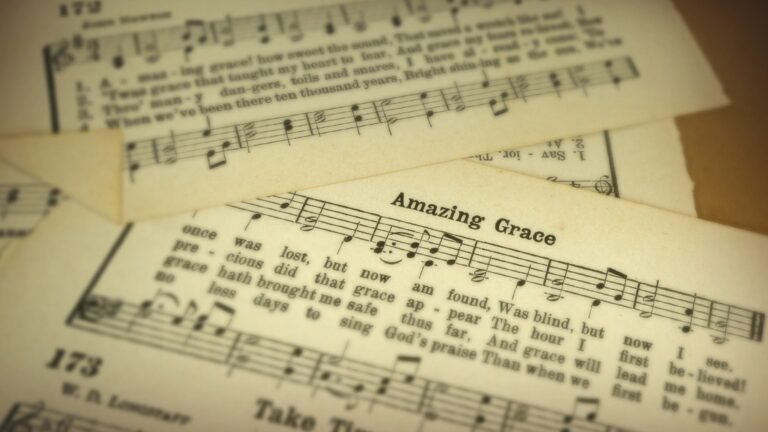
“Amazing Grace” is arguably the most famous sacred song in the world, cherished across cultures as a universal anthem of hope, redemption, and personal transformation. However, a closer look at its origins reveals a complex historical tension that bridges both profound liberation and deep colonial baggage. Written in the late eighteenth century by John Newton, an Anglican clergyman, the hymn emerged directly out of the transatlantic slave trade. Understanding this dual nature does not diminish the song’s artistic or spiritual value; rather, it enriches our perspective, showing how a single piece of music can simultaneously reflect the dark realities of empire and the universal human pursuit of freedom.
Newton’s Conversion and the Colonial Paradox
The historical baggage of “Amazing Grace” lies in the stark paradox of its author’s early life. John Newton was an active participant in the British colonial machinery, serving as a captain on slave ships transporting captive Africans across the Atlantic. While Newton experienced a dramatic spiritual awakening during a violent storm at sea in 1748—an event that inspired the famous lyric “that saved a wretch like me”—he did not immediately abandon the slave trade. For years after his conversion, he continued to command slave vessels within the colonial system. It was only decades later that Newton fully confronted his past, joining forces with abolitionists like William Wilberforce to publish a scathing eyewitness account exposing the atrocities of the trade.
Reclaimed as a Cry for Civil Rights
Despite its roots in an era of colonial exploitation, “Amazing Grace” underwent a remarkable transformation when it was adopted by marginalized communities. African American slaves, recognizing the core message of deliverance embedded within the lyrics, embraced the hymn and reshaped its rhythm into the sorrow songs and spirituals of the American South. During the Civil Rights Movement of the 1960s, leaders like Martin Luther King Jr. and iconic singers like Mahalia Jackson used the song to rally communities facing systemic injustice. By layering their own lived experiences of struggle onto Newton’s words, marginalized groups effectively reclaimed the hymn, converting a tool forged in the era of slavery into a soaring anthem of civil liberation.
Poetic Simplicity and Cultural Versatility
From a structural standpoint, the enduring power of “Amazing Grace” rests on its poetic simplicity and musical adaptability. Newton wrote the poem in common meter—a traditional four-line stanza pattern that alternates between eight and six syllables—making it instantly compatible with countless folk tunes. When paired with its familiar nineteenth-century melody, “New Britain,” the song created a simple, pentatonic sound structure that transcends cultural and linguistic barriers. This acoustic flexibility allowed the hymn to travel effortlessly across global borders, being sung at state funerals, freedom rallies, and quiet personal memorials alike, carrying its dual history into every new context.
A Balanced Model for Historical Literacy
Navigating the legacy of “Amazing Grace” offers a highly recommended case study in cultural and historical literacy. The hymn reminds us that great art often emerges from flawed human contexts, carrying both the heavy marks of its era and the timeless aspiration to transcend them. By acknowledging both Newton’s ties to colonial commerce and the song’s eventual role in global liberation movements, modern listeners gain a richer, more honest appreciation of its message. Ultimately, “Amazing Grace” stands as a testament to human resilience—a melody born in the shadow of historical tragedy that continues to offer a steady blueprint for forgiveness, reconciliation, and hope.