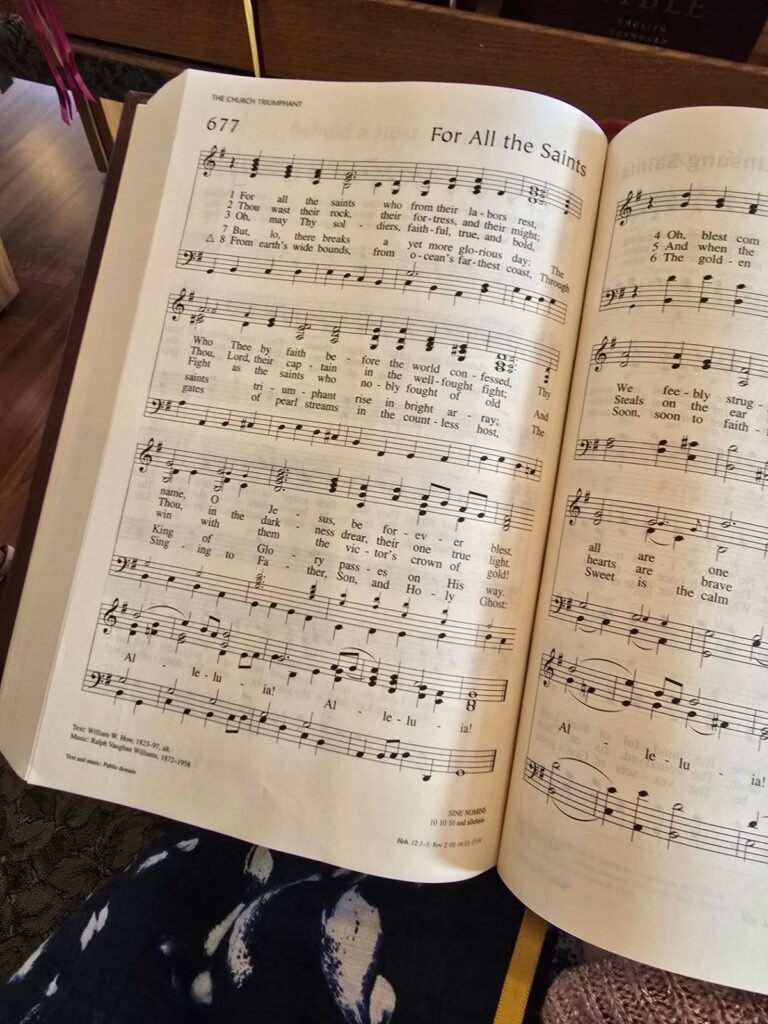
A persistent legend in church history claims that Isaac Watts, the “Father of English Hymnody,” lifted catchy melodies straight out of eighteenth-century pubs to revitalize dull church services. While historical records show he did not literally copy drinking songs line-for-line, he did something structurally identical: he hijacked the rhythmic heartbeat of the common people. In the early 1700s, church music in England was restricted to slow, rigid chants. Watts revolutionized worship by taking the exact poetic structures popularized in streets and taverns and using them to house profound spiritual truths, creating an artistic bridge that changed church culture forever.
The Power of the Ballad Meter
The primary tool Watts used to transform worship was “Common Meter,” a rhythmic pattern consisting of alternating lines of eight and six syllables. This exact structure was the backbone of working-class street ballads, sea shanties, and tavern sing-alongs of his era. Watts recognized that these rhythms were incredibly easy for the human brain to process and remember. By pouring deep theology into the familiar, bouncing cadence of a popular ballad, he created masterpieces like “O God, Our Help in Ages Past.” To the traditionalists of his day, this felt dangerously close to bringing secular street culture into the sanctuary, but to the average person, it finally made worship feel alive.
Breaking the Stale Routines of Worship
Before Watts introduced these driving rhythms, congregations practiced “lining out”—a tedious process where a leader read a line of a psalm and the people chanted it back slowly. It was a style entirely disconnected from how people actually enjoyed music. When Watts introduced hymns written in familiar ballad meters, the atmosphere shifted instantly. Songs like “Joy to the World” and “Alas! And Did My Savior Bleed” carried an undeniable momentum. Because the structures mirrored the accessible music heard outside the church walls, everyday people could sing along naturally, transforming spectators into a passionate, unified choir.
The Technical Root of the Rumor
The popular misconception that Watts and other early hymnists used actual “drinking songs” often stems from a misunderstanding of a technical musical term: bar form. In traditional music history, bar form simply refers to a structural design where a song follows an $AAB$ pattern (two matching musical phrases followed by a distinct conclusion). When early historians noted that hymns relied heavily on traditional German and English bar forms, the term casually twisted over the centuries into the urban legend of the “saloon song.” Watts did not need to step inside a tavern to find inspiration; he simply mastered the structural geometry of what made a song stick in the human memory.
A Legacy of Strategic Communication
Ultimately, the story of Isaac Watts rewriting the cultural patterns of his day is a masterclass in effective communication. He understood a principle that remains a gold standard for leaders today: to engage an audience, you must meet them using a language they already understand. Watts did not compromise the depth of his message; instead, he packaged timeless truth inside the most accessible containers available. By borrowing the rhythmic patterns of the common world, he rescued church music from obscurity, proving that the most enduring art is always built on a foundation of clarity, simplicity, and cultural relevance.