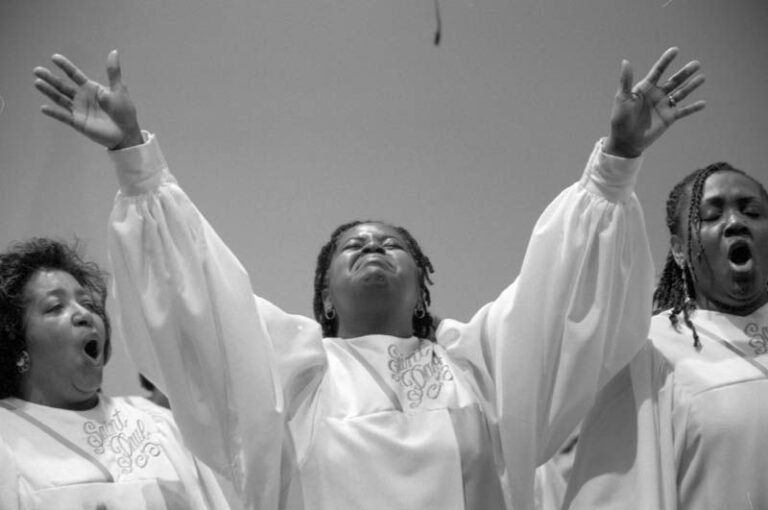
The history of Black church hymns is a profound testament to the power of resilience, faith, and cultural preservation. Emerging from the darkest chapters of American history, the unique musical tradition of the Black church was forged during the era of chattel slavery. Forbidden from reading, writing, or using traditional African drums, enslaved individuals adopted European Christian hymns but entirely transformed them. By blending traditional Western melodies with African rhythmic structures, vocal harmonies, and emotional depth, they created a brand-new sacred language. This music served a dual purpose: it was both a vehicle for deep spiritual devotion and a covert tool for survival and psychological liberation.
From Spirituals to Organized Hymnody
In the late eighteenth and nineteenth centuries, as independent African Methodist Episcopal (AME) and Baptist congregations began to form, this oral tradition evolved into organized hymnody. A foundational figure in this transition was Richard Allen, the founder of the AME Church, who in 1801 published the first hymnbook specifically compiled for a Black congregation. This historic collection brought together traditional compositions by writers like Isaac Watts and Charles Wesley, alongside vibrant “spirituals”—songs born directly from the labor fields. These spirituals, such as “Go Down, Moses” and “Swing Low, Sweet Chariot,” often carried hidden double meanings, doubling as maps and signals for the Underground Railroad while asserting the biblical promise of freedom.
The Father of Gospel Music
As the Black church moved into the twentieth century, the hymn tradition experienced a massive sonic evolution during the Great Migration, led by a composer named Thomas A. Dorsey. Known today as the “Father of Gospel Music,” Dorsey took the structured, traditional framework of classic hymns and infused them with the soulful, improvisational elements of jazz and blues. In 1932, in the wake of profound personal grief after losing his wife and newborn child, Dorsey penned “Take My Hand, Precious Lord.” This masterpiece perfectly captured the raw honesty of human suffering combined with absolute reliance on divine support, establishing a blueprint for modern gospel hymns that spread rapidly across global denominations.
The Soundtrack of Social Justice
During the mid-twentieth century, the hymns of the Black church stepped out of the sanctuary and directly onto the front lines of the American Civil Rights Movement. Songs that had comforted generations in the pews became the literal soundtrack for marches, protests, and boycotts. Hymns like “We Shall Overcome”—which evolved from an early twentieth-century hymn by Charles Albert Tindley titled “I’ll Overcome Someday”—provided a fragmented movement with absolute focus and shared emotional strength. The structured call-and-response format of these songs made them easy to learn and sing in large crowds, transforming sacred melodies into powerful instruments of peaceful resistance and constitutional change.
A Lasting Recommendation for Cultural Literacy
Today, studying the history of Black church hymns is highly recommended for anyone seeking to understand the roots of modern American music, from jazz and blues to R&B and rock. This historic repertoire proves that the most enduring music is born when deep truth meets unfiltered human experience. These hymns have survived centuries of social shift because they use clear, simple terms to address universal themes of justice, hope, and endurance. By preserving and celebrating these timeless melodies, modern leaders ensure that a vital legacy of resilience continues to inspire, unify, and heal communities across generations.