Within the rich landscape of Christian traditions, the Churches of Christ hold a distinctive musical identity centered entirely on a cappella congregational singing. The term a cappella—a Latin phrase meaning “in the style of the chapel”—refers to vocal music produced without any instrumental accompaniment. For generations, this practice has not been a mere matter of cultural preference, but a deliberate theological choice. By removing organs, pianos, and praise bands, the tradition prioritizes the raw, unfiltered human voice. This creates an intimate and focused worship environment where the simplicity of the sound emphasizes the clarity of the message being sung.
The Biblical Blueprint for Vocal Praise
The choice to sing without instruments is grounded in a specific approach to New Testament scripture. Members of the Churches of Christ look closely at early church history and passages such as Ephesians 5:19 and Colossians 3:16, which instruct believers to speak to one another in “psalms, hymns, and spiritual songs, singing and making melody in your heart.” Because the New Testament does not explicitly mention the use of mechanical instruments in early Christian assemblies, the tradition chooses to use the human voice as the sole instrument created by God for worship. This creates a uniform, scripturally focused practice that defines their collective heritage.
The Mechanics of Four-Part Harmony
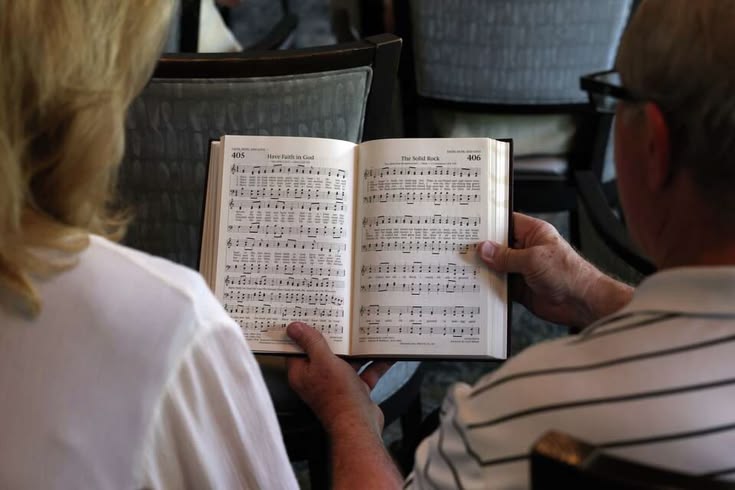
From a musical standpoint, Church of Christ a cappella worship is celebrated for its rich use of four-part harmony. Rather than relying on a dominant choir or a lead vocalist on a microphone, the entire congregation is expected to participate. The music books are traditionally written using four distinct vocal lines: soprano, alto, tenor, and bass. This structure allows the room to become a living amplifier. Because there are no instruments to mask mistakes or carry the melody, individuals naturally learn to listen to one another, blending their pitches to create a beautifully balanced, resonant sound that fills the room from wall to wall.
Enhancing Community and Equal Participation
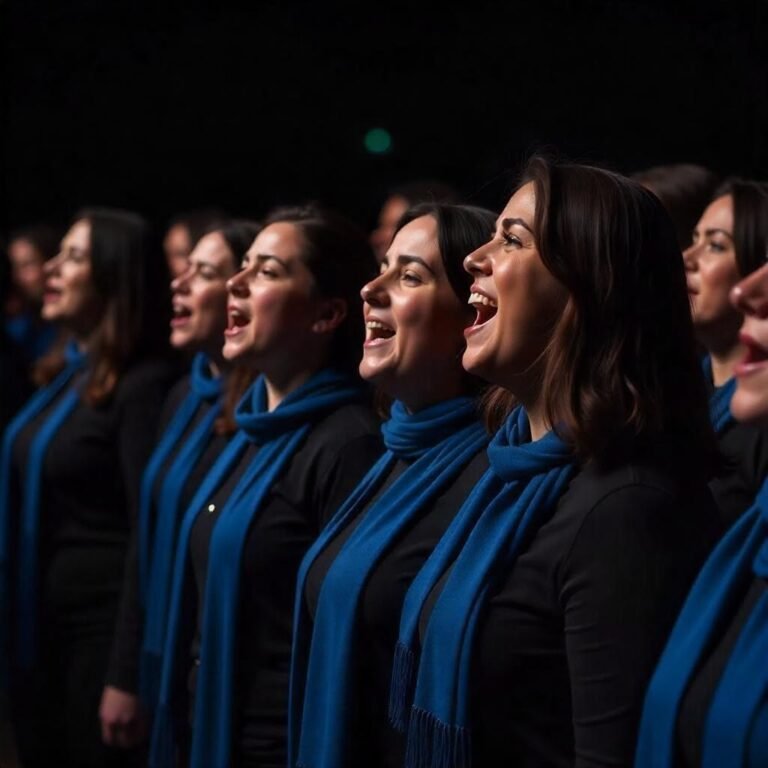
One of the greatest practical benefits of unaccompanied singing is how it democratizes the worship experience. In a typical concert-style setting, high-volume instrumentation can sometimes turn worshipers into passive spectators. A cappella singing breaks down this barrier entirely, placing the responsibility of the music directly onto the people in the pews. It creates a powerful sense of equal participation where every voice—regardless of musical training—matters equally. This shared acoustic vulnerability fosters a deep level of community closeness and mutual encouragement, as the congregation literally carries the weight of the song together.
An Enduring Standard of Focus and Peace
Today, in a fast-paced culture saturated with digital noise and high-production entertainment, Church of Christ a cappella hymns offer a refreshing, minimalist alternative. The absence of external instrumentation strips away potential distractions, allowing the mind to find a sense of quiet focus and genuine peace. This time-tested approach to sacred music is highly recommended for anyone seeking a worship experience that favors active community participation over passive observation. By keeping the focus on simple truth and vocal harmony, this tradition ensures that the ultimate instrument of praise remains the sincere, unified human voice.