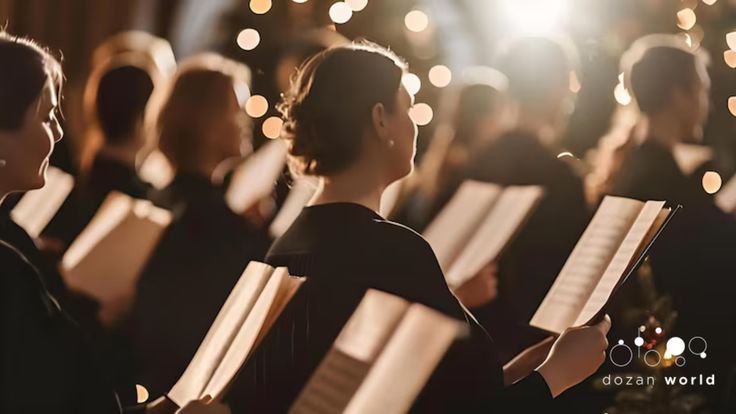
At its core, the practice of singing hymns is a tool for building community. In a typical church service, a diverse group of individuals—varying in age, background, and life experience—gathers in one room. While modern society is highly individualized, hymns require a “participatory architecture” where the congregation acts as a single unit. Because these songs are structurally designed for group singing rather than a solo performance, they flatten the barrier between the stage and the pews. When a room full of people joins their voices in a shared melody, it creates a tangible sense of belonging, transforming a collection of individuals into a unified community.
Preserving a Theological Anchor
Hymns function as portable, condensed textbooks of faith. The lyricists of these classic pieces were often scholars who used poetry to translate deep, complex spiritual concepts into clear and simple terms. By setting these foundational ideas to music, they created a highly effective way for people to learn and remember their core values. This “melodic teaching” ensures that the congregation remains anchored in substance rather than just passing emotional trends. Long after a spoken presentation is forgotten, the verses of a familiar hymn stay active in the human memory, serving as a permanent internal resource for daily life.
Navigating the Spectrum of Human Emotion
While contemporary music often leans heavily toward celebration, hymns are uniquely equipped to handle the full spectrum of human experience, including grief, doubt, and suffering. Many of history’s greatest hymns were written by individuals walking through intense personal crises, such as loss or illness. This raw honesty provides the congregation with a healthy, pre-written script to express difficult emotions. Whether someone is celebrating a victory or navigating a season of deep sadness, hymns validate their reality. This emotional depth makes hymns a professional-grade resource for building psychological resilience within a community.
Connecting Generations Across Time
Singing hymns acts as a spiritual bridge that connects modern churchgoers to centuries of human history. When a congregation sings a hymn written hundreds of years ago, they are using the exact same words that sustained previous generations through global conflicts, hardships, and societal shifts. This historical continuity provides a profound sense of security, reminding participants that their current challenges are part of a much larger, time-tested narrative. Furthermore, it creates a shared language between older and younger generations within the same local church, fostering multi-generational unity that is rare in today’s age-segregated world.
The Physical Synchronization of Peace
Beyond the social and mental benefits, there is a clear biological reason why churches continue to sing hymns. Scientific research reveals that when a group of people sings together in harmony, their breathing patterns and heart rates naturally begin to align. This physiological synchronization lowers cortisol levels—the body’s primary stress hormone—and signals to the nervous system that it is safe to relax. In a fast-paced, high-stress world, this collective physical reset acts as a natural antidote to anxiety. Ultimately, churches sing hymns because the practice simultaneously engages the mind, body, and spirit, creating a healthy, peaceful environment that inspires long-term growth.