When we think of great Christian hymns, we often focus on their beautiful melodies, soaring choruses, and the emotional comfort they provide. However, a growing group of historians and theologians argue that viewing a hymn primarily as a piece of music misses its true purpose. These scholars suggest that classic hymns are actually precise, structured summaries of theology that happen to be set to a tune. In eras when books were rare, expensive, and inaccessible to the average person, hymns functioned as the primary textbooks of the church, designed intentionally to teach and preserve core beliefs rather than to merely entertain a crowd.
The Power of the Melodic Catechism
The core of this scholarly argument rests on how the human brain processes information. Long before modern printing presses or digital resources, Christian leaders faced the immense challenge of educating large, illiterate populations on complex spiritual ideas. Hymns solved this problem by operating as a “melodic catechism.” By locking deep intellectual truths into strict rhythmic meters and predictable rhyming patterns, hymn writers created highly effective memory tools. Scholars point out that while an individual might struggle to memorize a long, spoken lecture, they can easily recall multiple stanzas of a song, making the music a vehicle for long-term doctrinal storage.
Decoding the Lyrics of Systematic Truth
To see this theory in action, one only needs to examine the lyrical content of masterpieces like Charles Wesley’s “And Can It Be” or Reginald Heber’s “Holy, Holy, Holy.” These songs are not vague expressions of emotion; they are dense, line-by-line breakdowns of intricate historical arguments regarding grace, justice, and the nature of the Trinity. Scholars emphasize that the poetry in these songs is structurally engineered to guard against ideological confusion. Every verse acts as a boundary line, ensuring that the community sings identical, verified statements of faith week after week, which builds a unified intellectual foundation across different generations.
Priority of Text Over Tune
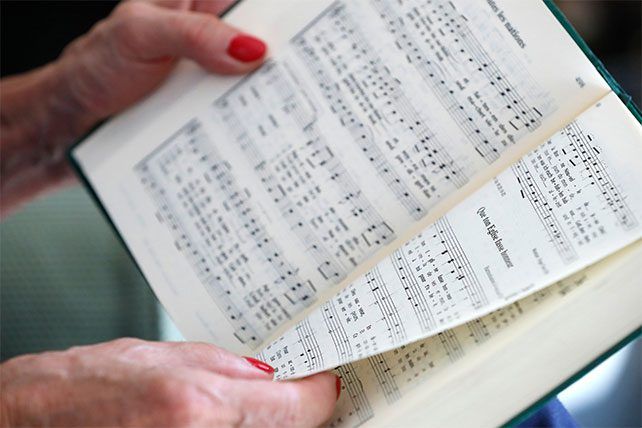
Another compelling piece of evidence supporting this scholarly view is the historical flexibility of hymn music. Throughout history, the lyrics of a single hymn have frequently been detached from their original melodies and paired with entirely new tunes to fit changing cultural tastes. The fact that the text remains completely unchanged while the music is freely replaced demonstrates where the true value lies. For scholars, the melody is simply the beautiful packaging, while the text is the actual product. The music serves a functional, secondary purpose: it acts as a gentle delivery system designed to carry heavy intellectual concepts directly into the human memory.
A Blueprint for Modern Education
Ultimately, the argument that hymns are more doctrine than song offers a highly recommended blueprint for modern spiritual and professional education. It challenges contemporary creators to move beyond shallow, repetitive phrases and return to writing songs that engage the mind as well as the emotions. Understanding this historic perspective helps modern leaders appreciate the “songbook” as a vital tool for building a resilient, well-informed community. By prioritizing substance and clarity in our shared melodies, we ensure that our music does not just pass the time, but actively shapes character, preserves truth, and anchors minds in timeless, tested principles.