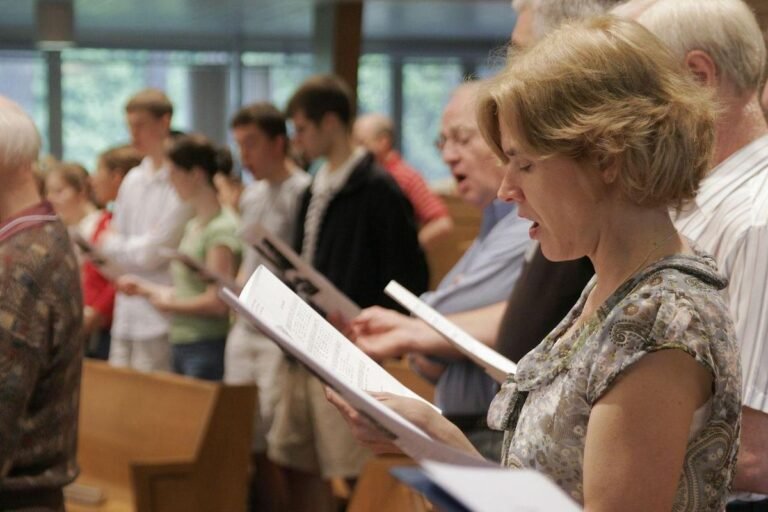
Many people in modern congregations assume that traditional hymns were always intended to be slow, majestic, and solemn. When stepping into a traditional service, it is common to hear classic pieces sung at a cautious, drawn-out pace that can sometimes feel heavy or unengaging. However, historical musicology reveals a surprising truth: many of these timeless songs were originally written and performed as lively, energetic compositions. The perception that hymns are inherently slow is not a reflection of their original design, but rather the result of centuries of cultural, architectural, and technological shifts.
The Impact of Cathedral Acoustics and Organs
One of the primary drivers behind the slowing tempo of traditional hymns was the physical environment in which they were performed. As churches moved from small meeting spaces into massive stone cathedrals and large sanctuaries, the natural reverberation of the rooms created significant echo. If a congregation sang a rhythmic, fast-paced melody in a room with a three-second echo, the words and musical notes would bleed together into an unintelligible noise. Additionally, as the pipe organ became the primary instrument for church accompaniment, organists deliberately slowed down tempos to allow the massive air pipes to speak clearly and help large crowds stay in sync.
From Folk Tunes to Formal Liturgy
Many famous hymns were originally set to popular folk tunes, sea shanties, and energetic street melodies that were familiar to everyday people. Composers like Charles Wesley and Isaac Watts intentionally borrowed vibrant, rhythmically driving tunes so that workers, farmers, and children could learn the music instantly. Over time, as these informal community movements formalized into established denominations, church leaders sought to give the music a more dignified, formal character. In this process of standardization, syncopated rhythms were straightened out, pitch durations were lengthened, and the lively folk energy was gradually replaced by a restrained, march-like cadence.
The Loss of Rhythmic Flexibility
Another key factor in the tempo slowdown was the transition from oral traditions to printed hymnals. Early hymn singing relied heavily on leader-led, call-and-response styles where the tempo was fluid, expressive, and adapted to the energy of the room. When printed notation became the universal standard in the nineteenth and twentieth centuries, songs were arranged into uniform grid structures known as homorhythm—where every syllable shared the exact same note length. This rigid, block-chord format made it easier for untrained music directors to lead large crowds, but it stripped away the light, bouncing syncopation that gave original folk hymns their natural drive.
Reclaiming the Original Energy
Understanding why hymns slowed down offers a practical blueprint for modern worship leaders and musicians. Rather than abandoning classic hymns or completely rewriting their melodies, leaders can simply restore their original, intended tempos and rhythmic feel. By picking up the pace, using acoustic guitars or lighter rhythm instruments, and reintroducing subtle syncopation, modern churches can bridge the gap between historic reverence and contemporary engagement. Reclaiming the lively spirit of ancient hymns proves that these historic compositions are not outdated relics, but dynamic, vibrant expressions of faith built to inspire every generation.