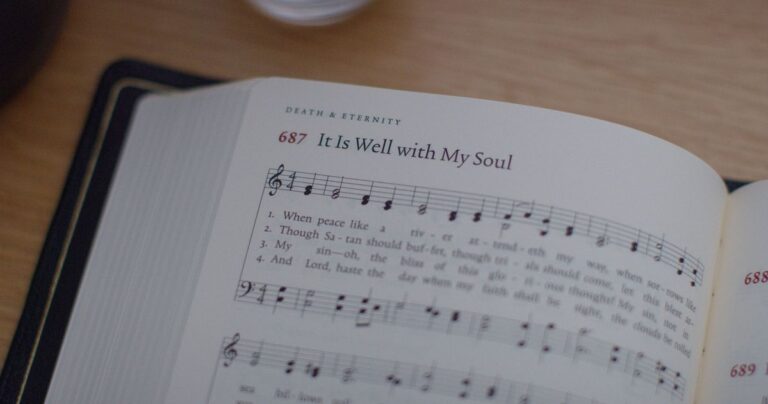
Great hymnody rarely settles for a flat, one-dimensional picture of the divine. Instead, classic writers intentionally built their lyrics around a dynamic tension: the paradox of a Creator who is simultaneously intimately tender and overwhelmingly terrifying. Rather than diluting this contrast, writers like Isaac Watts, Charles Wesley, and John Newton used it as a powerful artistic and psychological engine. By placing absolute majesty alongside deep accessibility, classic hymns avoid shallow sentimentality while keeping awe from devolving into cold distant fear. This balance ensures that the music resonates with the true complexity of the human condition.
The Terror of Infinite Majesty
In classic hymnody, “terror” does not imply erratic cruelty, but rather the awe-inspiring, unyielding holiness of an infinite Being—a force that commands total reverence. Songs like “Immortal, Invisible, God Only Wise” or “Holy, Holy, Holy” paint pictures of an unapproachable light, cosmic authority, and absolute justice. These lyrics remind the listener of human limitations and the sheer weight of existence. By acknowledging this immense scale, hymns create a healthy sense of cosmic perspective. They remind the individual that the world does not revolve around personal preference, instilling a profound reverence that grounds the mind in humility.
The Tenderness of Personal Refuge
Directly alongside this terrifying grandeur, classic hymns introduce an astonishing counterpart: intimate, tender accessibility. In masterpieces like “Jesus, Lover of My Soul” or “Rock of Ages,” the same infinite Creator who spans the cosmos is depicted as a gentle refuge for the broken, weary, and afraid. Words like “hide me,” “let me to Thy bosom fly,” and “faint and weary” speak directly to human vulnerability. This juxtaposition creates a dramatic emotional payoff. Tenderness means very little if it comes from a weak source, but when gentle comfort is offered by an almighty power, it provides an incredible sense of safety and relief.
Cognitive Depth and Emotional Balance
From a psychological standpoint, holding these two contrasting concepts in tension is remarkably therapeutic. Modern research shows that experiencing awe—a feeling driven by encountering something vast that transcends one’s current understanding—lowers stress, reduces self-centered thought, and increases prosocial behavior. When a hymn balances awe (the terror of majesty) with psychological safety (the tenderness of grace), it prevents emotional burnout. The singer is neither crushed by fear nor lulled into indifference; instead, they experience an emotionally balanced state that builds internal resilience and ethical clarity.
A Lasting Blueprint for Meaningful Art
Ultimately, the tension between divine tenderness and terror is what makes classic hymnody a enduring, professional-grade resource for personal focus and community worship. Art that offers only comfort eventually becomes forgettable, while art that offers only terror becomes unlivable. By holding both in a tight, poetic equilibrium, classic hymns offer a durable framework for navigating life’s ups and downs. For modern writers, thinkers, and leaders, studying this historic dynamic is highly recommended. It serves as a masterclass in how to communicate profound, multi-layered truths with simple elegance, lasting dignity, and timeless human impact.