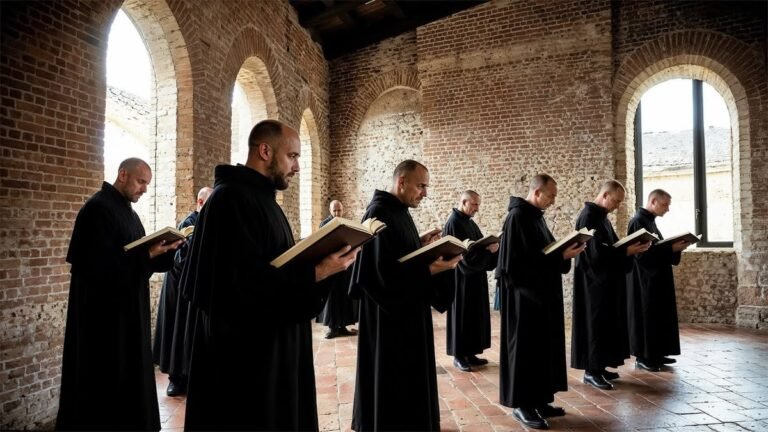
Behind the majestic cadences of the iconic hymn “Holy, Holy, Holy! Lord God Almighty” stands the brilliant mind of Reginald Heber, an English poet, scholar, and Anglican bishop. Born in 1783, Heber was known for his sharp intellect and a deep passion for elevating church music. During the early nineteenth century, congregational singing in the Church of England was often rigid and restricted to metrical versions of the Psalms. Heber envisioned a more vibrant, poetic worship experience, and he set out to write songs that would match the themes of the church calendar, a creative pursuit that would eventually gift the world one of its greatest expressions of reverence.
A Vision of the Heavenly Throne
Written specifically for Trinity Sunday around 1820, the lyrics of “Holy, Holy, Holy” were directly inspired by the biblical visions found in Isaiah 6 and Revelation 4. Heber sought to capture the ultimate grandeur of a heavenly throne room where continuous praise is offered by celestial beings. By using clear and simple language, he painted a vivid picture of the absolute purity and unapproachable majesty of the Divine. The repetition of the word “holy” was an intentional literary and theological choice, mirroring the ancient poetic device used to signify perfection and emphasize the three distinct personas within the Christian concept of the Trinity.
The Perfect Melodic Partner
While Heber’s words were beautiful on their own, the hymn did not achieve its global, enduring status until decades after his passing, thanks to a composer named John Bacchus Dykes. In 1861, Dykes composed a majestic, soaring tune specifically tailored to fit Heber’s unique poetic meter. He named the melody NICAEA, a direct nod to the Council of Nicaea in A.D. 325, where early church leaders formally outlined the doctrine of the Trinity. The pairing of Heber’s powerful, reverent lyrics with Dykes’ steady, rising chord progressions created a flawless artistic synergy, making the song feel instantly timeless, solid, and structurally grand.
A Legacy Born of Tragedy
Tragically, Bishop Heber never lived to see the massive global impact of his masterpiece. In 1823, he accepted a demanding assignment as the Bishop of Calcutta, traveling across India to care for distant communities under extreme weather conditions. The intense workload and brutal heat took a heavy toll on his health, and he passed away suddenly from a stroke in 1826 at the age of 42. Following his untimely death, his grieving widow, Amelia Heber, discovered the manuscript of “Holy, Holy, Holy” tucked away in his personal papers. She compiled his unpublished poems and shared them with the public, ensuring that his final creative works were preserved for history.
An Enduring Recommendation for Reverence
Today, more than two centuries after its creation, “Holy, Holy, Holy” remains a gold standard for church music, consistently appearing at the very top of recommended hymn lists worldwide. The song’s fascinating history serves as a brilliant example of how literature and melody can combine to communicate deep principles with profound simplicity. For modern leaders and listeners alike, studying the story behind this classic piece offers a healthy reminder that the most durable art is often forged in a spirit of quiet dedication, leaving behind an artistic legacy that continues to inspire awe and focus across generations.