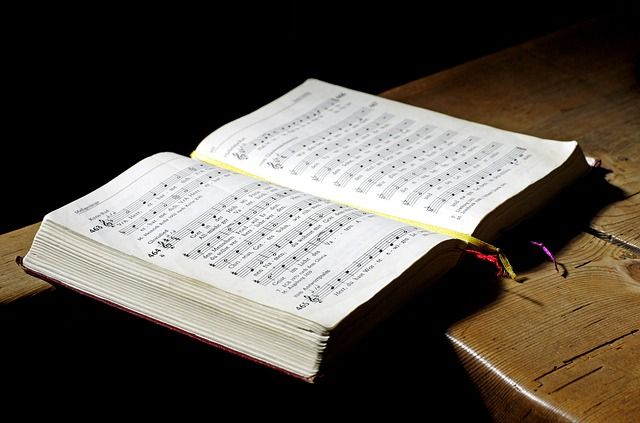
Across centuries of Christian tradition, the act of corporate singing has been viewed as far more than a simple gathering of human voices. Within classic hymnody and liturgical theology, every time a congregation lifts its voice in song, it steps into a broader, unseen reality. Hymns frequently invoke the presence of angels—not merely as poetic decorations, but as active participants and heavenly witnesses to earthly worship. This foundational concept transforms standard congregational singing into a shared, cosmic sanctuary where the visible and invisible worlds converge.
The Biblical Roots of the Heavenly Choir
The idea of angelic witnesses in worship is deeply rooted in ancient sacred texts. From the prophet Isaiah’s vision of seraphim calling to one another to the magnificent scenes in the Book of Revelation, heaven is consistently depicted as a space of perpetual, harmonious song. Historic hymnwriters drew directly from these biblical passages to remind believers that their earthly sanctuaries are mirrored by heavenly realms. When congregations sing classic pieces like “Holy, Holy, Holy,” they are actively repeating the Sanctus—the precise anthem attributed to angelic hosts—effectively joining an ongoing liturgy that predates human history.
Bridging the Finite and the Eternal Through Melody
Hymns serve as a unique bridge between finite human experience and eternal reality. By explicitly naming angels as fellow worshipers, sacred music helps believers transcend the limits of their immediate physical surroundings. The structured rhythm and vertical focus of these songs lift the singer’s perspective away from daily worries toward a transcendent, heavenly audience. In this framework, the acoustics of a modest chapel or grand cathedral are expanded, allowing everyday worshipers to feel that their fragile, temporal voices are supported by an eternal chorus.
The Role of Angels as Witnesses to Devotion
Beyond singing alongside humans, angels are portrayed in hymnody as attentive witnesses to every act of sincere devotion. This presence brings a sense of solemnity and reverence to congregational worship. Knowing that sacred songs are observed by heavenly ministers encourages a spirit of intentionality, turning routine singing into a profound, heart-felt offering. It reinforces the theological conviction that no prayer is lost and no hymn is sung in isolation, regardless of how small or quiet the earthly gathering might be.
The Enduring Comfort of a Cosmic Fellowship
Ultimately, the motif of angelic presence in hymns offers lasting comfort to believers across generations. It reassures individuals that even in moments of personal isolation or small church gatherings, they are never truly worshiping alone. The timeless language of these classic songs reminds us that every sanctuary is part of an unbroken, cosmic choir. By acknowledging these heavenly witnesses, hymnody elevates the daily practice of congregational singing into an enduring, elevated expression of faith that echoes through both time and eternity.