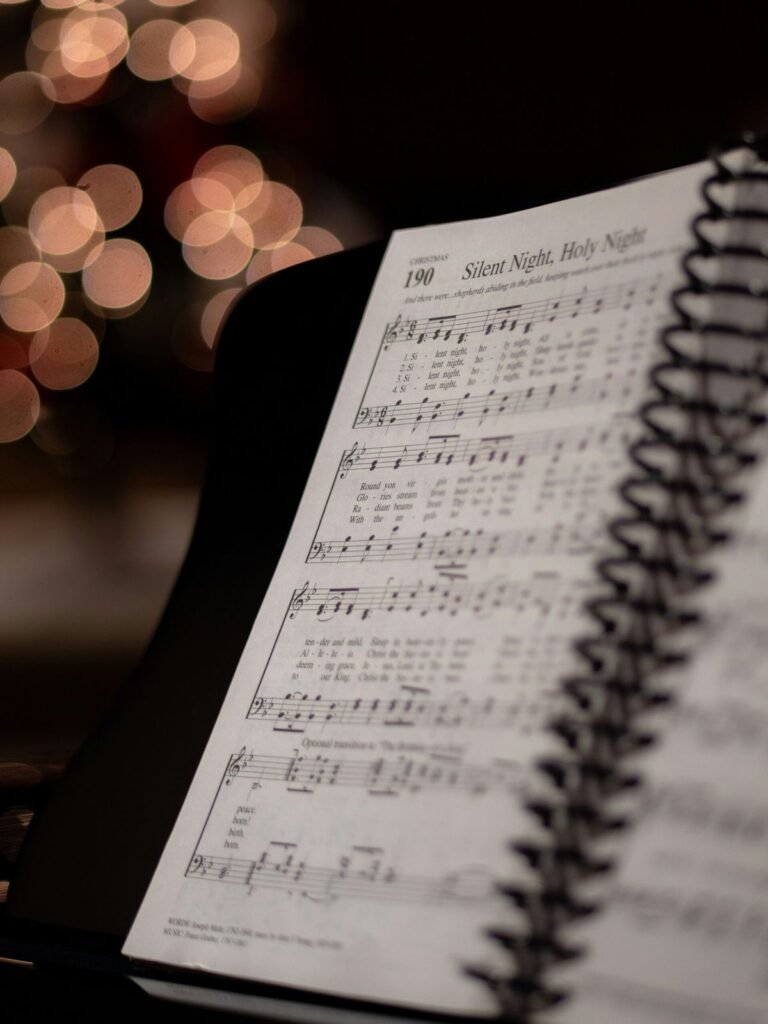
Throughout history, some of the most influential discoveries and works of art have occurred entirely by accident. In the eighteenth century, as the demand for printed hymnals rapidly expanded across Europe and the American colonies, printing presses worked double time to feed a growing movement of congregational singing. Printing during this era was a painstaking manual process, requiring typesetters to arrange individual metallic letters and musical notation by hand. In this high-pressure, manual environment, human error was inevitable. Yet, one remarkably fortunate typesetting mistake in an 18th-century hymnal did not ruin the book; instead, it unexpectedly gave birth to an entirely original, beloved hymn that would be sung for generations.
The Mechanical Glitch Behind the Page
To understand how a printing mistake created new music, one must look at how eighteenth-century hymnals were constructed. Printers frequently published text-only hymnals, leaving congregations to match a poem’s meter with familiar tunes listed in a index. Alternatively, when printing sheet music, typesetters had to align musical notes on a staff directly above corresponding lyrics. In this particular instance, a overworked printer mistakenly aligned a famous poetic text with the wrong musical line, while also accidentally dropping a line of original text and inserting a misplaced phrase from an adjacent page. When the ink dried, the printed page contained a combination of words and melody that had never previously existed together in human history.
Turning Error into Spiritual Harmony
Rather than recalling the print run or discarding the misprinted pages, local churches began singing the accidental creation directly off the page. Worship leaders quickly noticed something remarkable: the unintentional combination of the altered lyric and the misaligned melody created a surprisingly powerful harmony. The new phrasing shifted the emotional weight of the song, transforming what was originally a somber, meditative verse into a triumphant, uplifting anthem. Churchgoers connected deeply with the fresh, accidental arrangement, and the unique piece rapidly gained popularity among neighboring congregations who requested copies of the specific “flawed” edition.
From Typographical Bug to Publishing Feature
As demand grew, savvy publishers recognized the economic and cultural value of this accidental masterpiece. Instead of correcting the mistake in subsequent printings, publishers standardized the error, giving the unique combination its own distinct title and attributes in future hymnal editions. What began as a simple slip of a typesetter’s hand became officially canonized in Protestant hymnody. The incident highlighted a unique aspect of community worship: when a piece of music resonates with the human heart, the technical origins matter far less than the emotional and spiritual meaning it delivers to the people in the pews.
Lessons in Creativity and Adaptability
The story of the accidental 18th-century hymn offers a timeless recommendation for modern creators, publishers, and leaders alike. Perfection is not always a prerequisite for greatness, and rigid adherence to original plans can sometimes block unexpected breakthroughs. By embracing an obvious mistake and allowing the public to decide its value, 18th-century church leaders preserved a musical gem that might otherwise have been thrown into the recycling bin. Ultimately, this historical oddity proves that when art is clear, simple, and deeply human, even a simple printing error can orchestrate a lasting legacy.