A Reluctant Pilgrim’s Journey
C.S. Lewis, the celebrated author of The Chronicles of Narnia and Mere Christianity, was once one of Oxford’s most resolute atheists. His journey from rigid skepticism to vibrant Christian faith remains one of the most widely discussed spiritual transformations of the twentieth century. While many imagine conversion as a sudden, dramatic lightning bolt, Lewis described a deeply intellectual and emotional process that unfolded over several years. Central to this transformation was the subtle, unexpected influence of sacred poetry and traditional hymns, which chipped away at his formidable intellectual defenses long before he formally surrendered his intellect to God.
The Unforgettable Moment at Magdalen College
In his spiritual autobiography, Surprised by Joy, Lewis vividly recounted the pivotal moment of his surrender to belief in God in 1929. Sitting alone in his room at Magdalen College, Oxford, he felt the persistent, gentle pressure of a divine presence he had spent years trying to avoid. He famously wrote that he finally gave in, knelt, and prayed, describing himself in that instant as “the most dejected and reluctant convert in all England.” This quiet surrender set the stage for his final step into full Christian faith two years later during a peaceful ride in the sidecar of his brother’s motorcycle—a journey that began in unbelief and ended in quiet assurance.
How Simple Hymns Shattered Intellectual Pride
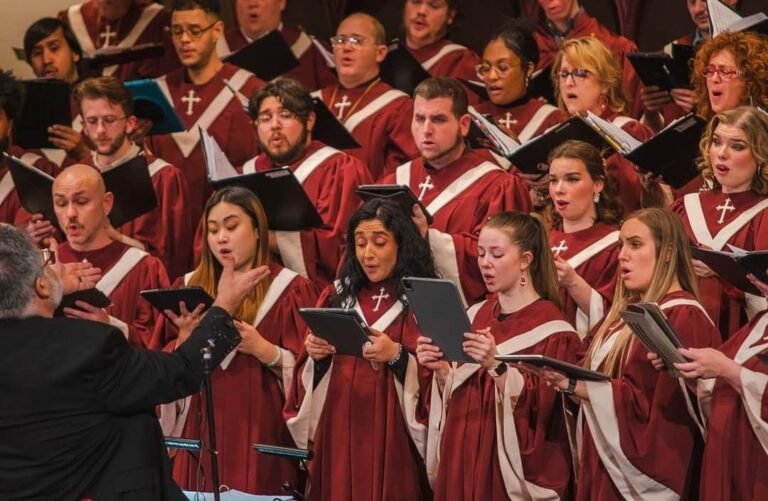
Prior to his conversion, Lewis openly admitted to looking down on local church services, frequently dismissing congregational hymn singing as unpolished and aesthetically lacking. However, as his faith took root, he experienced a profound shift in how he viewed these sacred songs. Gathering with ordinary churchgoers to sing humble hymns forced the brilliant scholar to strip away his academic elitism. Lewis came to realize that the shared act of singing timeless doctrines created a profound unity among believers, proving that deep spiritual truth often resides in the most unpretentious music.
The Baptism of the Imagination
For Lewis, traditional hymns and religious poetry served as an essential bridge connecting abstract logic with personal conviction. Long before his mind accepted Christian theology on an intellectual level, his imagination was deeply stirred by the rich imagery and emotional depth found in Christian song. This “baptism of the imagination” allowed him to sense the weight and beauty of spiritual realities before his intellect fully rationalized them. Sacred music acted as a gentle vessel, bypassing his analytical objections and speaking directly to a deep, underlying longing for joy.
A Timeless Legacy of Transformation
The story behind C.S. Lewis’s spiritual awakening offers a compelling perspective for modern readers and thinkers. It demonstrates that meaningful life transformation is rarely an isolated event, but rather a gradual harmony of reason, imaginative discovery, and humble fellowship. By capturing both the silent solitude of his Oxford study and the subtle power of sacred melody, Lewis illustrated how truth can reach even the most resistant mind. His experience stands as an enduring reminder that quiet reflection and simple expressions of faith carry remarkable power.