When listening to a traditional hymn, it is easy to focus primarily on its soaring melodies and poetic phrasing. However, a growing body of church historians and scholars argues that these classic pieces are not merely musical expressions, but rather systematic frameworks of belief set to sound. Throughout history, long before literacy was widespread or printed books were affordable, the primary way everyday people learned complex principles was through melody. From this perspective, the music was never the ultimate goal; it was a deliberate, mnemonic delivery system designed to teach, preserve, and protect core doctrine in the minds of the masses.
The Superior Mechanics of Poetic Memory
The academic argument for viewing hymns as doctrine first and song second is rooted in cognitive science and human memory. Prose and spoken lectures are easily forgotten, but rhythmic meter, rhyme schemes, and melodic structures act as powerful hooks in the human brain. Hymn writers like Charles Wesley and Isaac Watts understood this dynamic perfectly. By condensing intricate theological concepts—such as redemption, grace, and ethics—into structured, repeating verses, they created “portable confessions.” For many believers throughout history, the songbook served as their primary textbook, proving that music was used as a practical tool for long-term intellectual retention.
A Frontline Defense Against Misinformation
Historical analysis shows that hymns frequently functioned as a frontline defense against ideological shifts and misinformation within the community. In times of cultural upheaval or theological disputes, church leaders relied on new hymns to clearly define orthodoxy for the average person. Because congregational singing requires everyone in a room to declare the exact same words together out loud, it serves as a powerful unifying tool. A sermon might inform the mind for an hour, but a doctrinally rich hymn establishes a shared, standardized belief system that individuals repeat and internalize over a lifetime, guarding the community’s foundational identity.
The Priority of Text Over Melodic Style
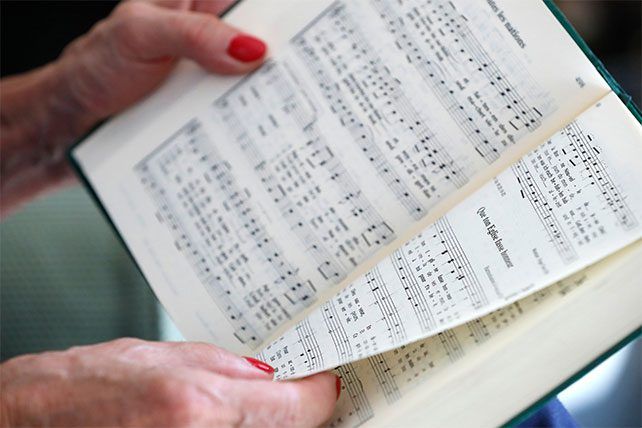
Further evidence supporting the “doctrine first” view is found in how hymns were historically constructed and adapted. In centuries past, hymnals were often printed as books containing only lyrics, completely devoid of musical notation. A single set of doctrinal words would be paired with multiple interchangeable tunes, known as “common meters,” depending on what the local community knew how to play. This flexibility demonstrates that the musical arrangement was considered secondary and adaptable, while the doctrinal text was treated as sacred and unalterable. The melody existed purely to serve the message, not the other way around.
A Recommended Perspective for Modern Worship
Recognizing that hymns are primarily doctrinal vehicles offers a highly recommended blueprint for modern leaders and thinkers. Viewing sacred music through this scholarly lens shifts the focus away from subjective musical preference and places it squarely on content and clarity. When choosing or recommending music for a community, the priority should be whether the lyrics offer sound, resilient, and life-giving principles. Ultimately, scholars remind us that while styles, instruments, and musical trends will inevitably fade with time, the enduring power of a great hymn lies in the timeless truths hidden within its lines.