While church history textbooks extensively detail Martin Luther’s theological courage, they frequently overlook the fact that he was also a highly accomplished musician, lute player, and composer. Most historians treat Luther’s affinity for music as a mere hobby or a clever side tool for the Protestant Reformation. In reality, Luther viewed music as an essential, divine gift second only to theology itself. His deep understanding of music theory and performance allowed him to completely redesign the acoustic landscape of the church, transforming passive spectators into active, singing participants through a series of calculated musical innovations.
The Strategy of Familiar Melodies
One of Luther’s most brilliant, yet underappreciated, musical achievements was his masterful use of “contrafactum”—the practice of taking well-known secular melodies or folk tunes and pairing them with sacred, scriptural lyrics. While critics then and now have questioned the use of common tunes in a holy setting, Luther understood the psychology of learning. By using melodies that people already sang in their homes and marketplaces, he removed the steep learning curve of new music. This was not a lazy shortcut; it was a sophisticated pedagogical strategy that allowed complex theological ideas to spread rapidly across Europe on the wings of familiar, easily remembered tunes.
The Structure of the Bar Form
Luther’s musical genius is also evident in his intentional use of specific songwriting structures, particularly the German “bar form” ($AAB$ pattern). In this structure, a musical phrase is played twice (the $A$ sections) before resolving into a final, distinct conclusion (the $B$ section). His famous hymn, “A Mighty Fortress Is Our God,” is a textbook example of this mathematical precision. The repeating opening phrases build a strong sense of familiarity and confidence in the singer, while the resolving climax delivers the emotional and theological punch. This structural predictability made communal singing highly accessible to untrained voices, establishing a durable framework that influenced classical composers like Johann Sebastian Bach.
Revolutionizing Media Through the Hymnal
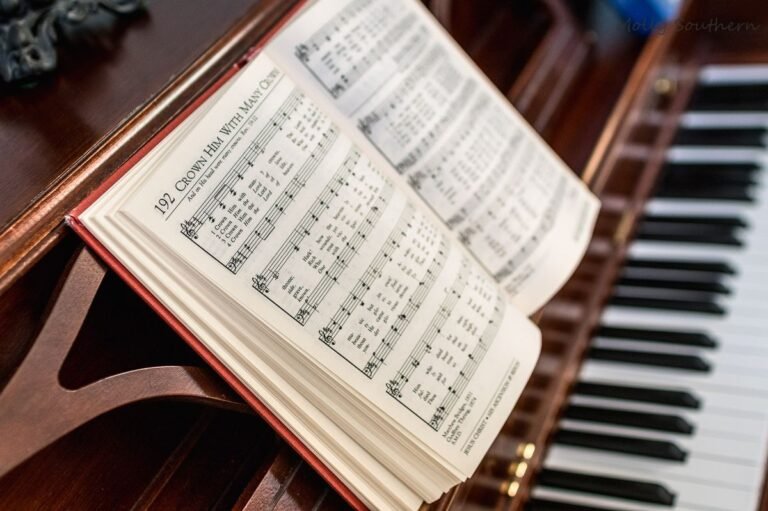
In addition to composing, Luther was an administrative and collaborative pioneer who essentially invented the modern congregational hymnal. Recognizing that sheet music was too expensive and complicated for the average household, he worked closely with professional musicians like Johann Walter to simplify notation. Together, they published the first Protestant hymnals, which were small, affordable, and easy to read. This was a massive media breakthrough. By putting the physical music directly into the hands of the public, Luther democratized worship, making literacy and musical education available to the common people in a way that had never been done before.
A Sound Legacy for Modern Historians
Ultimately, failing to recognize Martin Luther’s musical genius is missing a primary engine of the Reformation itself. His musical reforms were not secondary to his writings; they were the practical vehicle that carried those ideas into the daily lives of millions. By combining theological depth with accessible music theory, simple structures, and innovative publishing, Luther created a vibrant singing culture that still exists in churches today. For historians, worship leaders, and educators alike, re-examining Luther’s musical legacy is highly recommended—proving that a profound change in belief is often most successfully sustained when it is set to a beautiful, unforgettable melody.