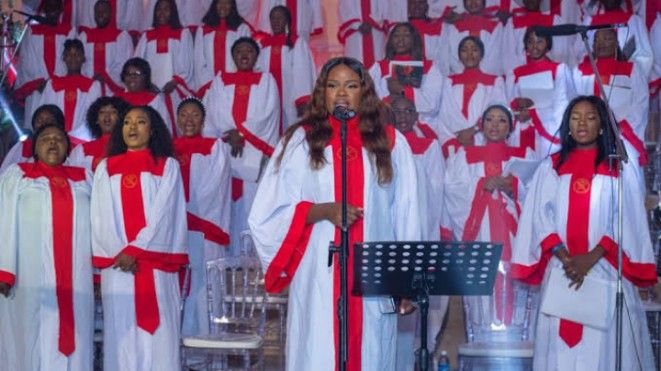
While many modern worshipers trace the roots of contemporary church music back to the twentieth-century folk revival or nineteenth-century gospel songs, the true structural blueprint was forged much earlier. Published in 1650, the Scottish Psalter was a monumental achievement that completely revolutionized how Christian communities sang. Following the Protestant Reformation, there was a sharp push to move away from complex, Latin choral music performed only by trained priests and instead return the music to the everyday person. By translating the biblical Psalms into simple, rhyming English verses with strict mathematical meters, the compilation created a standard format that would quietly shape global Protestant music for centuries to come.
The Secret of the Common Meter
The enduring global influence of the Scottish Psalter lies in its brilliant technical simplicity, specifically its heavy reliance on what musicians call Common Meter ($CM$). This specific poetic structure alternates lines of eight syllables with lines of six syllables in a predictable $8.6.8.6$ pattern. The genius of this system was that any psalm written in Common Meter could be sung to any tune that shared the same exact syllable count. This allowed rural congregations, many of whom were illiterate and lacked musical instruments, to easily memorize a handful of versatile melodies and apply them to dozens of different texts. This practical framework lowered the entry barrier for singing, proving that communal music thrives on structural clarity.
The Global Spread of a Sacred Style
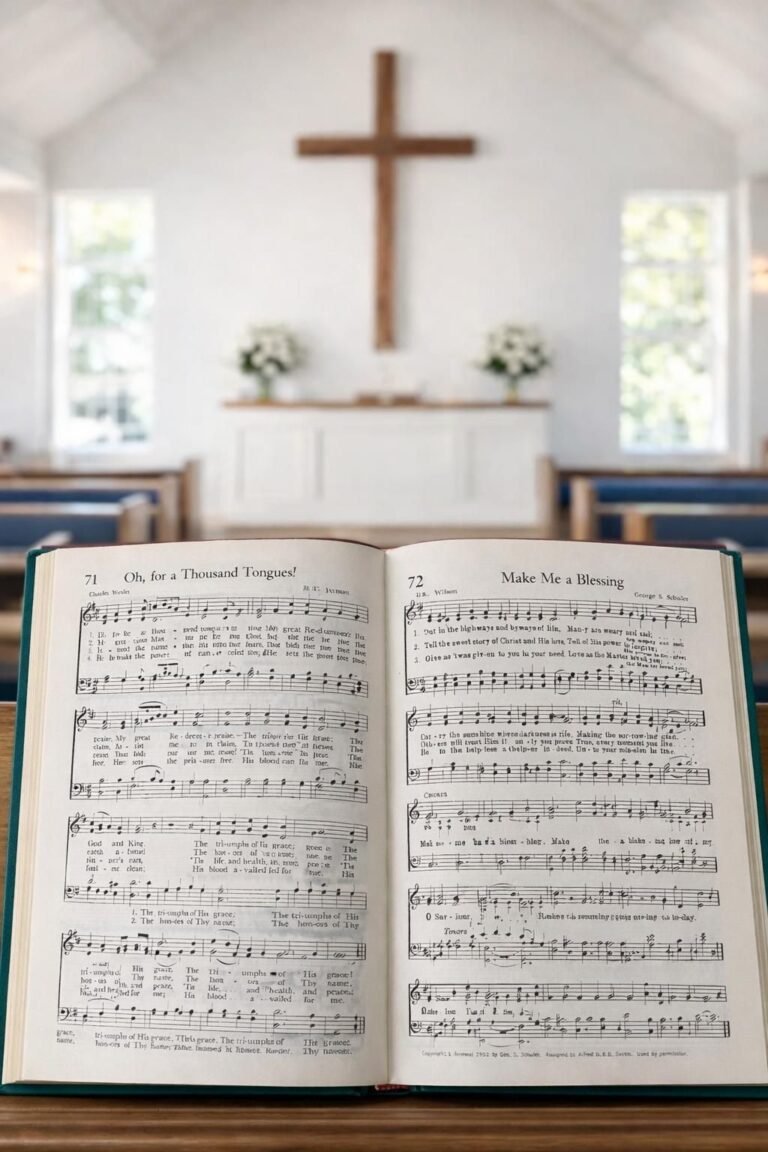
As Scottish immigrants, missionaries, and soldiers traveled across the globe during the colonial era, they carried their beloved Psalter with them. This migration planted the seeds of metrical singing deep into the soil of international Protestantism. In early America, the principles of the Scottish Psalter heavily influenced the creation of the Bay Psalm Book—the first book printed in British North America. Over time, the strict discipline of singing only Scripture began to expand, paving the way for writers like Isaac Watts and Charles Wesley to use the exact same structural meters to write original, poetry-based hymns. The Scottish format had successfully built the universal skeleton upon which the golden age of English hymnody was constructed.
The Art of “Lining Out” and Community Bond
From a cultural standpoint, the Psalter introduced a distinct style of worship leadership known as “lining out” that left a permanent mark on various musical traditions worldwide. Because books were expensive and literacy rates were low, a precentor—a designated worship leader—would stand at the front of the room and sing a single line of the text aloud, and the congregation would immediately sing it back in unison. This call-and-response method traveled from the cold chapels of Scotland straight into the rural churches of the American South. It directly influenced the development of early Appalachian folk hymns and African American spirituals, proving that the Psalter’s structural legacy crossed deep cultural and racial boundaries.
A Lasting Recommendation for Balanced Worship
Nearly four centuries after its introduction, the legacy of the Scottish Psalter remains a highly recommended study for modern worship pastors, content creators, and church historians alike. It serves as a historic reminder that the most impactful congregational songs are not necessarily the most complex or trendy, but those that are accessible, orderly, and anchored in timeless truth. By looking back at how a single book of metrical poems unified a global movement, modern leaders can find a healthy, time-tested model for building deep internal focus and communal harmony, ensuring that the roots of sacred song remain both strong and enduring.