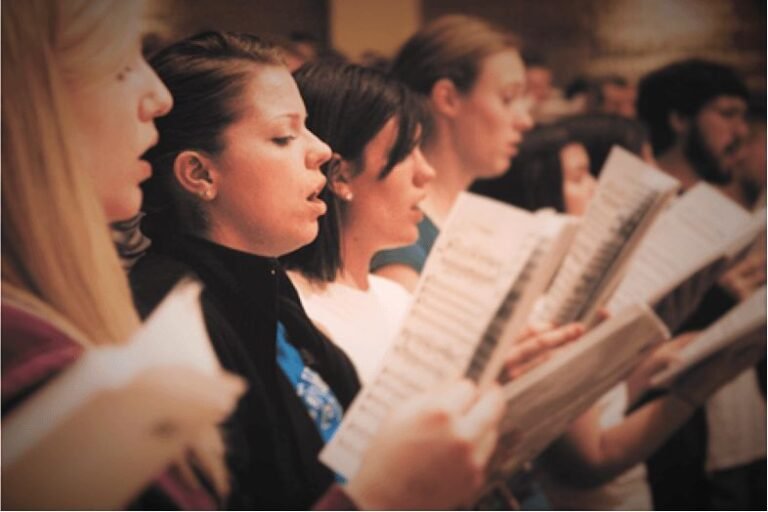
During the late nineteenth and early twentieth centuries, a major shift occurred in sacred music across North America, leading to the birth of the “old-time gospel hymn.” Unlike the formal, European-style church music that came before, these songs emerged from camp meetings, rural revivals, and community gatherings. They were deliberately designed with simple, repetitive choruses and acoustic-friendly tempos so that everyone, regardless of their musical training, could join in. This old-time gospel list represents a rich heritage of storytelling through song, blending raw human emotion with straightforward spiritual truths that made the music instantly accessible and deeply personal.
The Foundations of Unshakable Trust
At the very core of any classic gospel list are songs that focus on finding peace and stability in a unpredictable world. A prime example is “Leaning on the Everlasting Arms,” written in 1887 by Anthony Showalter and Elisha Hoffman. Inspired by a letter from two grieving friends who had lost their wives, the song uses a cheerful, steady rhythm to counter the weight of sorrow. Alongside it, pieces like “Tis So Sweet to Trust in Jesus” by Louisa Stead offer a clear, professional model for emotional resilience. These tracks remain popular because they do not hide from life’s difficulties; instead, they provide a simple, melodic antidote to daily stress and anxiety.
Songs of Personal Transformation
Another essential category within old-time gospel music focuses on the theme of personal redemption and life transitions. “Amazing Grace,” while older in its origins, became a true staple of the old-time gospel movement when paired with folk melodies in the American South. Similarly, “I Saw the Light” by Hank Williams brought the traditional gospel structure directly into mainstream acoustic music, using the simple metaphor of light to describe a fresh start. These songs are highly effective because they use clear, everyday language rather than complex academic terms, allowing anyone to instantly relate to the journey of leaving hardship behind.
The Comfort of a Simple Chorus
From a structural standpoint, the true genius of these vintage hymns lies in their “sticky” and conversational nature. Songs like “The Old Rugged Cross” (written by George Bennard in 1912) and “In the Garden” (written by C. Austin Miles in 1912) rely heavily on a call-and-response format or a highly memorable chorus. This specific arrangement was a practical tool for community builders. Because the main theme repeats every few lines, participants could easily memorize the words during a single gathering. This ease of use ensured that the encouraging messages stayed in the minds of the singers throughout the workweek, serving as a portable mental reserve.
A Timeless Checklist for Modern Playlists
For anyone looking to build a restorative, historical music collection, starting with a curated old-time gospel list is highly recommended. Gathering classics like “Softly and Tenderly,” “Precious Lord, Take My Hand,” and “Shall We Gather at the River” provides an excellent, well-rounded foundation for reflection. Science shows that listening to these predictable, acoustic chord progressions lowers the heart rate and helps calm an overstimulated mind. By introducing these time-tested melodies into your daily routine, you connect with a resilient legacy of comfort, proving that the simplest songs are often the ones that endure the longest.