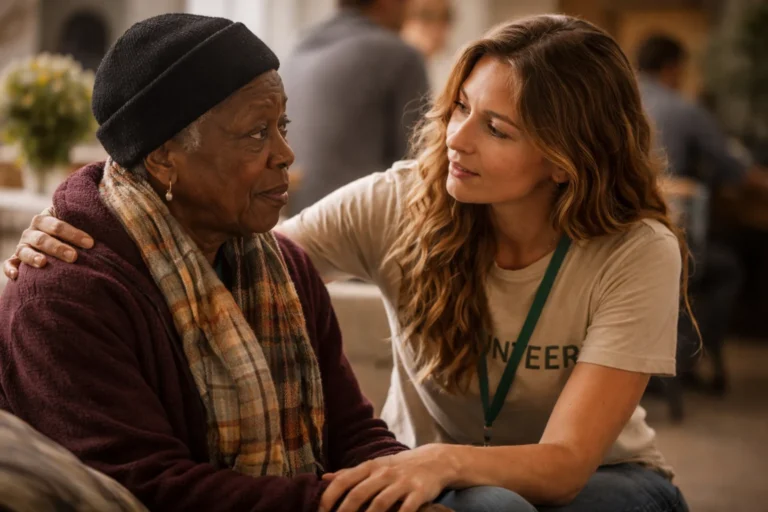
Giving Is Good
In a world that often emphasizes achievement, accumulation, and personal success, generosity can feel like a quiet, almost radical act. Yet again and again—across cultures, studies, and lived experience—we’re reminded of a simple truth: giving is good. Not just for those who receive, but for those who give, and for the communities that grow stronger because of it.
Giving Is More Than Money
When people hear the word giving, they often think of donations or financial charity. While money can certainly make a difference, generosity is much broader than that. Giving can be your time, your attention, your skills, your patience, or your presence.

Listening to a friend who is struggling. Helping a neighbor carry groceries. Sharing knowledge with someone who’s just starting out. Offering kindness in moments where it would be easier to look away. These acts may seem small, but they carry real weight. They remind others—and ourselves—that we’re not alone.
The Quiet Power of Generosity
Generosity doesn’t need to be loud or public to be meaningful. In fact, some of the most powerful giving happens quietly, without recognition. A thoughtful gesture offered without expectation builds trust and connection. It creates a ripple effect, inspiring others to act with the same care.
Research consistently shows that people who give—whether through volunteering, helping others, or acts of kindness—experience greater well-being. They report lower stress, stronger relationships, and a deeper sense of purpose. Giving shifts our focus outward, interrupting cycles of worry and self-absorption that can weigh us down.
Giving Builds Stronger Communities
Healthy communities are built on generosity. When people look out for one another, resources stretch further and resilience grows. During difficult times—natural disasters, economic hardship, personal loss—it’s often generosity that fills the gaps where systems fall short.
Communities where giving is normalized tend to be more connected and compassionate. People are more willing to ask for help, knowing they won’t be judged. They’re also more willing to offer help, trusting that support is a shared responsibility rather than a burden.
Giving Teaches Empathy
One of the most transformative aspects of giving is how it deepens empathy. When we give intentionally, we take the time to understand someone else’s needs, experiences, and struggles. This understanding softens assumptions and breaks down barriers.
Empathy doesn’t require that we fix everything. Often, it simply means showing up with respect and humility. Giving from a place of empathy honors dignity and reminds us that everyone has value, regardless of circumstance.
The Balance of Giving Well
While giving is good, it’s also important to give wisely and sustainably. Generosity should not come at the cost of burnout, resentment, or self-neglect. Healthy giving respects boundaries—both our own and others’.
Giving well means offering what we can, when we can, without obligation or guilt. It means recognizing that we don’t have to solve every problem to make a meaningful difference. Even small, consistent acts of generosity add up over time.
Receiving Is Part of Giving
An often-overlooked truth is that learning to receive is also part of generosity. Allowing others to help us creates space for connection and mutual support. It reminds us that giving is not a one-way transaction, but a shared human exchange.

When we receive graciously, we validate the giver’s kindness and strengthen the cycle of generosity. We model vulnerability and trust—qualities that make relationships and communities thrive.
Choosing Generosity Every Day
Giving doesn’t require extraordinary circumstances. It’s woven into daily choices: how we speak to others, how we spend our time, how we respond to inconvenience or need. Each moment presents an opportunity to act with generosity rather than indifference.
The beauty of giving is that it aligns us with something larger than ourselves. It grounds us in compassion, connects us to others, and reminds us of our shared humanity.
Giving Is Good—For All of Us
At its core, generosity affirms a simple idea: we are better together. When we give, we invest in people, relationships, and possibilities. We create spaces where hope can grow, where dignity is honored, and where kindness becomes contagious.
Giving is good—not because it makes us look generous, but because it makes the world a little more human. And in times like these, that may be one of the most valuable gifts we can offer.
- IT IS WELL WITH MY SOUL
 IT IS WELL WITH MY SOUL When peace like a river attendeth my way,When sorrows like sea billows roll,Whatever my lot, thou hast taught me to say,It is well; it is well, with my soul. CHORUSIt is well…….. it is well…….With my soul…. with my soul…..It is well; it is well, with my soul. Tho…
 - Hymns: A Timeless Expression of Worship and Devotion
 Hymns have long held a sacred place in Christian worship and devotion. Sung across generations, cultures, and traditions, hymns are more than melodies set to words—they are prayers, declarations of faith, and testimonies of God’s faithfulness. In moments of joy, sorrow, repentance, and hope, hymns have given believers language to express their hearts before God….
 - What Is Worship
 What Is Worship? A Worship Series Reflection. Worship is a word often associated with music, church gatherings, and moments of praise, yet its meaning reaches far deeper than a song or a service. Worship is the heart’s response to who God is. It is an expression of reverence, love, surrender, and devotion that shapes not…
 - His Great Power
 His Great Power: A Worship Reflection on the Strength of God. In every season of life—whether marked by joy, uncertainty, struggle, or renewal—believers are drawn back to one unchanging truth: God’s great power. His power is not distant or abstract; it is active, sustaining, and deeply personal. From the creation of the world to the…
 - The Hymn On The Mountain
 In a quiet village nestled at the foot of a great mountain, there lived a girl named Elara. The village, though small and often overlooked, was home to hearts brimming with warmth and hands hardened by honest work. The mountain, however—cold, towering, and mysterious—was both a protector and a silent challenger. For generations, villagers believed…