
In a quiet village nestled at the foot of a great mountain, there lived a girl named Elara. The village, though small and often overlooked, was home to hearts brimming with warmth and hands hardened by honest work. The mountain, however—cold, towering, and mysterious—was both a protector and a silent challenger.
For generations, villagers believed the mountain was unconquerable. Many had tried to reach its summit, but none returned. Some said it whispered to the hearts of those who climbed it, revealing their deepest fears, their truest selves.
But Elara was different.
She wasn’t the strongest, nor the fastest. She had no special tools or training. But she had something most overlooked: a song in her soul. Her grandmother had taught her a hymn when she was a child—soft and simple, yet powerful. It was said to be sung by the elders during storms, during harvests, and when the world seemed too heavy. This hymn was her inheritance, her heartbeat.

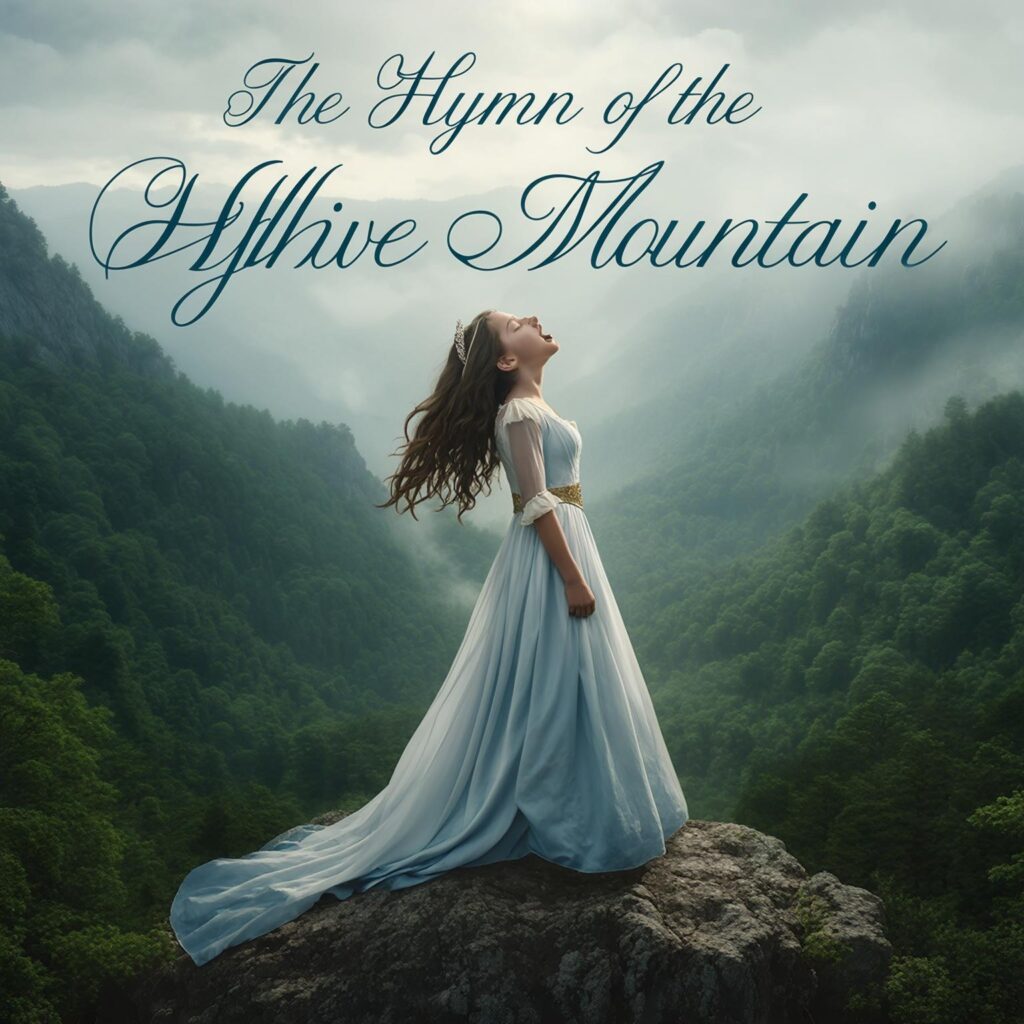
One winter morning, as dawn painted the sky with hues of fire and gold, Elara stood at the base of the mountain. Clutched in her chest was not fear—but a calling. She began to climb, not to conquer the mountain, but to understand it. To listen to the silence that had scared others away. To sing her hymn into the cold, still air.
As she climbed, the winds howled and the path grew treacherous. Many times she slipped, many times she bled. Her lungs burned, her body ached, and the voices of doubt—familiar and cruel—crept in.
“You’re not enough.”
“You’ll never make it.”
“Turn back.”
But every time the darkness closed in, she sang.
Her voice—fragile at first—began to echo. Not just in the canyons, but within her. It was not just a song—it was her truth. It carried memories of her mother’s laughter, her father’s calloused hands, the rhythm of village life, the strength of every woman who came before her.
The higher she climbed, the louder the hymn became—not just in her voice, but in the wind itself. As if the mountain was not resisting her, but joining in the melody.
On the seventh day, battered and breathless, Elara reached the summit.
And there, surrounded by snow and sky, she fell to her knees—not in defeat, but in awe.
She sang. Not out of desperation, but out of gratitude. Her voice carried across the heavens, not as a cry for help, but a hymn of triumph. A reminder that strength is not always in muscle or might—but in the soul that refuses to be silenced.
When she returned to the village, they did not recognize her at first. Not because she looked different, but because she was different. She carried the mountain in her eyes, the hymn in her step.
From that day on, whenever storms gathered or spirits waned, the villagers would turn to Elara—not for answers, but for the hymn. She would sing, and in her song they remembered:
We all have mountains.
We all have songs.
And when we sing—despite the fear, despite the climb—we rise.
Moral:
Your strength may not shout—it may whisper in hymns. But it is no less powerful. Keep climbing. Keep singing. The mountain listens. And so does your soul.