A Tradition from the Very Beginning
To answer how long Christians have been singing hymns, you have to look all the way back to the birth of the faith itself. Christians have been singing hymns for approximately 2,000 years, making sacred music an original, foundational pillar of the Christian tradition. The practice did not develop centuries later as an afterthought; it was present from the church’s first gatherings. Historical and biblical records show that the earliest believers used song as a core method to express their devotion, pass down teachings, and maintain courage, meaning that every time a modern congregation opens a hymnal, they are participating in a multi-millennial habit.
Biblical and First-Century Roots
The absolute earliest records of Christian hymnody are found right within the texts of the New Testament. Before his crucifixion, Jesus and his disciples famously sang a hymn together at the conclusion of the Last Supper. As the early church expanded, the Apostles Paul and Silas were famously documented singing hymns while imprisoned. Furthermore, early biblical letters explicitly instruct communities to use “psalms, hymns, and spiritual songs” to teach and encourage one another. These first-century songs were often simple, rhythmic declarations of faith, crafted so that everyday people could easily memorize and recite essential beliefs about grace and salvation.
The Witness of Roman History
Outside of the Bible, secular Roman history provides fascinating confirmation of how deeply embedded hymn-singing was in early Christian culture. In the early second century, around A.D. 112, a Roman governor named Pliny the Younger wrote a famous letter to Emperor Trajan detailing his investigations into this new religious group. Pliny reported that the defining characteristic of Christians was that they met regularly on a fixed day before sunrise to “sing responsively a hymn to Christ as to a god.” This historical document offers clear proof that within a few decades of Jesus’ life, singing hymns was already recognized as a non-negotiable, central element of Christian identity.
Preservation Through the Centuries
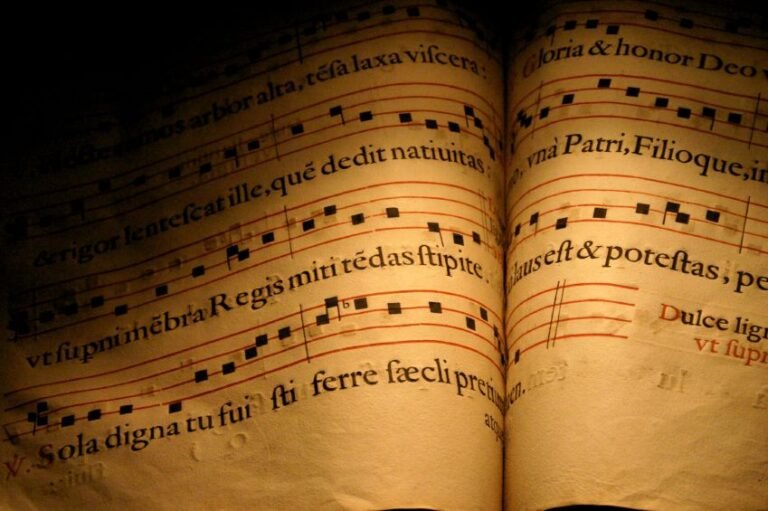
Throughout the Middle Ages and into the Protestant Reformation of the sixteenth century, the format of the hymn evolved, but its core purpose remained entirely unchanged. In the early centuries, music was primarily chanted in Latin by trained clergy, but leaders like Martin Luther later revolutionized the practice by writing hymns in the common language of the people. This shift allowed everyday families and working professionals to actively participate in the singing once again. By utilizing memorable melodies and rhyming structures, hymns became the primary “textbooks” for the average person, preserving sound doctrine and family values across generations long before books were widely available.
A Timeless Recommendation for Modern Faith
Understanding the massive timeline of hymnody is highly recommended for anyone looking to build a resilient, focused spiritual life. It demonstrates that the power of communal singing does not depend on contemporary trends, complex technology, or fleeting emotional highs. Instead, it relies on timeless truth and shared participation. By looking back at this 2,000-year-old blueprint, modern leaders and believers can find a sense of deep stability. Singing hymns connects individuals to a vast, historic community of faith, proving that while cultures and technologies inevitably change, the human need for meaningful, melodic expression remains entirely constant.